GOOD PRACTICES: Ankarana: community tourism with the initiative of women

Ankarana - Fapbm

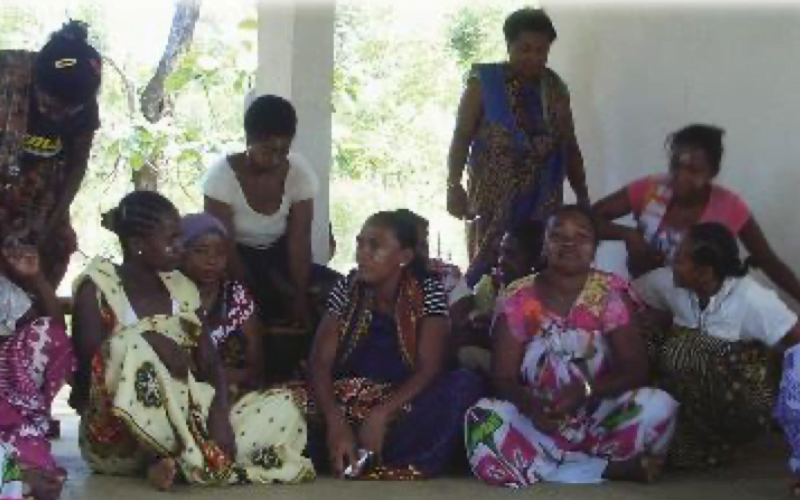
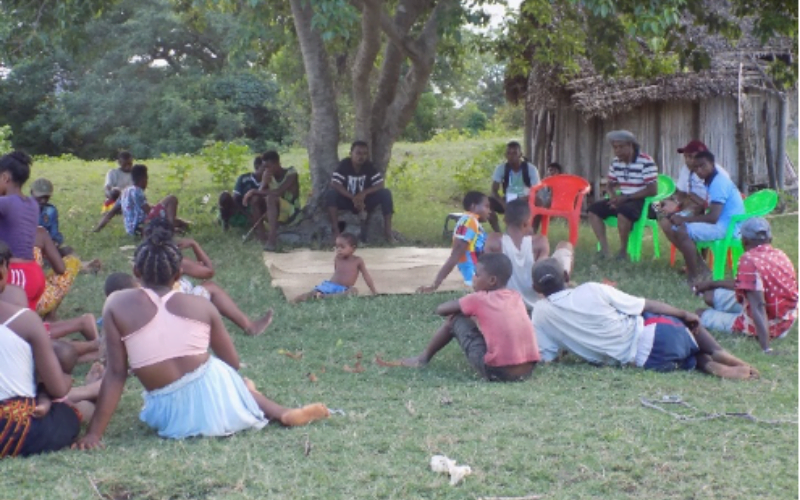
In Ankarana National Park, the Mahamasina Women’s Association (Fikambanan’ny Vehivavy Mahamasina-FIVEAMA) offers an authentic experience combining a journey into nature with the culture discovery. On the program: traditional case-bungalows, local food, handicraft ecoshop, local culture museum and a dive into Antakarana history and customs through a walk to the sacred lakes of Mahamasina.   Craftswomen, farmers, beekeepers, etc. women from Mahamasina gathered in an association to build a value chain around community tourism. Founded in 2004 and formally in 2012, the association now has nearly 40 members. Through the multiple activities of the Association, members find outlets for their production and improve their incomes, because part of the revenues are returned to the members, 10% are allocated to the operation of the Association.   Their commitment to the conservation of the protected area brought them together and enabled them to gain the support of partners from beginning. They are actively …

The FAPBM Environmental and Social Management System (ESMS) process presented to CAFE members

fapbm

On February 23, 2022, the Executive Secretariat of the Consortium of African Funds for Environment (CAFE) held a virtual meeting of the ESMS working group, in which CAFE members participated. FAPBM presented the progress of the development of its ESMS, started in early 2021, on this occasion.   The ESMS declares the environmental and social safeguard commitments and principles of FAPBM to ensure that the negative environmental and social impacts of projects funded by FAPBM are avoided or, if unavoidable, minimized and properly mitigated. It also includes an operational guide (at the level of the Foundation and PA managers, the system for managing complaints, grievances and complaints, the risks of funding impacts, environmental and social standards, and monitoring and evaluation of the system).   The 2nd presentation of the meeting was made by Biofund from Mozambique, entitled « avoiding trouble : a scaled approach to an ESMS (Environmental and Social Risk Management …

South Eastern’s protected areas coping with cyclones

fapbm

Emnati then Batsiraï, in less than 2 weeks (10 and 22 February), two cyclones hit the south-east of Madagascar where two FAPBM-granted protected areas are located: Agnalazaha, managed by MBG and Manombo, managed by MNP. Serge Ratsirahonana, Monitoring and Evaluation Officer, and Evah Ralalarisoa, Internal Control Officer of FAPBM, paid a visit on site in late February and early March for an audit and monitoring and evaluation mission. It was clear that both protected areas were heavily impacted by cyclones.   With regard to biodiversity, those tropical cyclones have severely depleted forests of their foliage. This scarcity of leaves in their usual territories would have forced arboreal and folivorous fauna species, particularly lemurs, to change territory and/or travel greater distances to feed. In addition, in the restoration areas, more than 85% of the seedlings planted last year (Q3 2021) were uprooted. Seedlings from previous years were more or less resistant …

“Let us save Menabe Antimena”: a new on track development and management plan 2022-2026 and additional funding dedicated to safeguarding the protected area.

Menabe - Fapbm

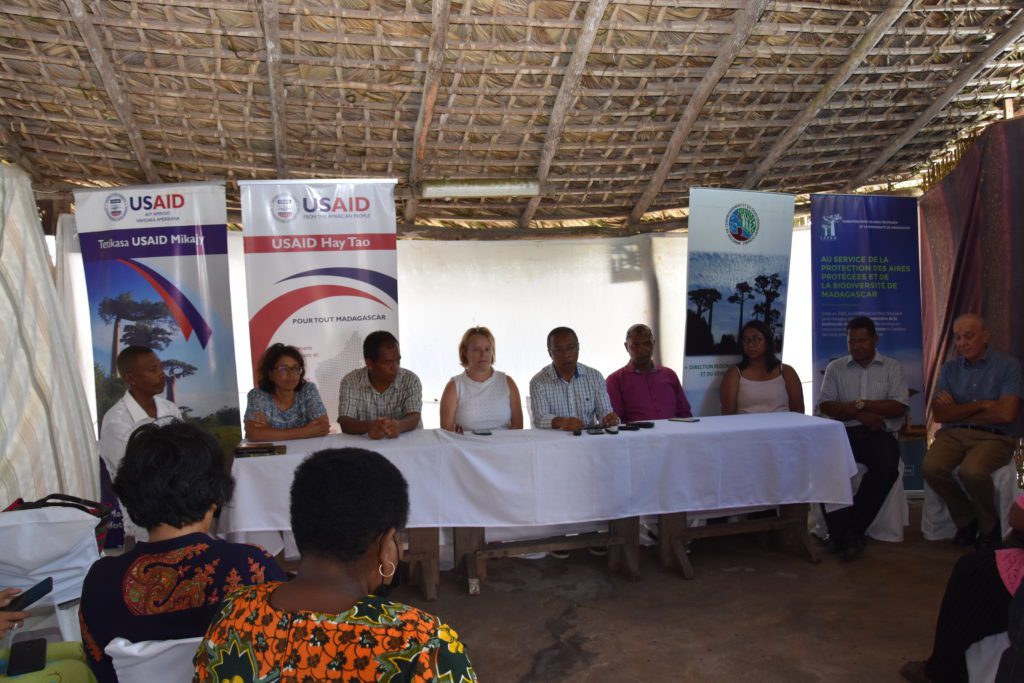
The Ministry of the Environment and Sustainable Development (MEDD), supported by its technical and financial partners which are USAID Mikajy and FAPBM, gathered the stakeholders of the Menabe Antimena protected area (APMA), to present the results of consultations on the objectives, the management strategies and the five-year Development and Management Plan (PAG) of the protected area on March 25th, 2022 in Morondava, before its validation at the local and regional levels. The workshop was also an opportunity to sign the FAPBM funding agreements in favor of the current managers of the protected area (Fanamby, Durrell and CNFEREF).   APMA is an exceptional biodiversity site with four endemic species that are found nowhere else, including the world smallest primate, Madam Berthe’s Microcebus. But these species and the other invaluable ecological values of the area such as water and climate regulation are highly threatened, as 44% of APMA forest has been lost …

An emergency fund to secure the core areas of Menabe Antimena

Antimena - Fapbm

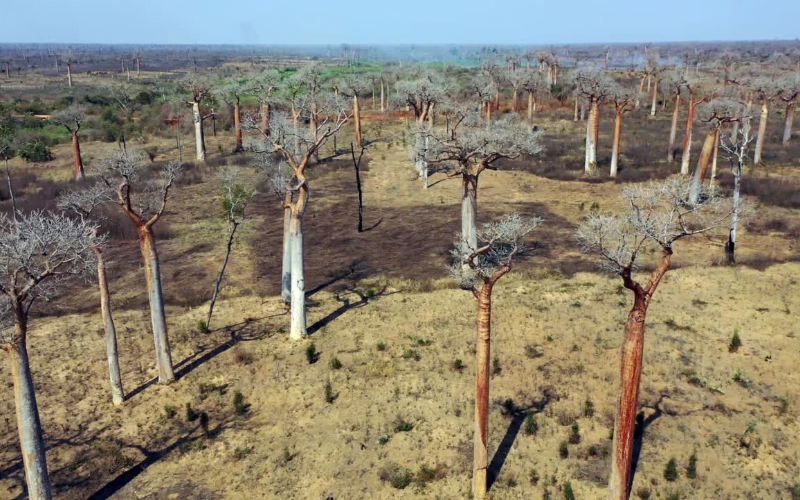
Only 44% of the dry forest in Menabe Antimena remains (South Western part of Madagascar), a victim of illicit maize and groundnut cultivation by migrants, who are themselves at the mercy of economic insecurity. The COVID-19 health crisis – exacerbating the communities’ vulnerability – has aggravated fires and clearing. In late 2021, FAPBM joined the stakeholders in responding favourably to a request for special intervention funds from Fanamby, which is working on a plot of land in the protected area. The urgency was to deal with the fire period, usually from November to January. Thanks to this financing, Fanamby has strengthened the patrols of the protected area’s core areas in collaboration with the collaboration of Regional Direction of Environment and Sustainable Devlopment-DREDD  (seizure of illegal products, chase of offenders, support of authorities and partners for arrests, coordination with fire agents and stakeholders for fire extinction). FAPBM’s financial contribution of MGA …

Cyclone period: The usefulness of wetlands

Antimena - Fapbm

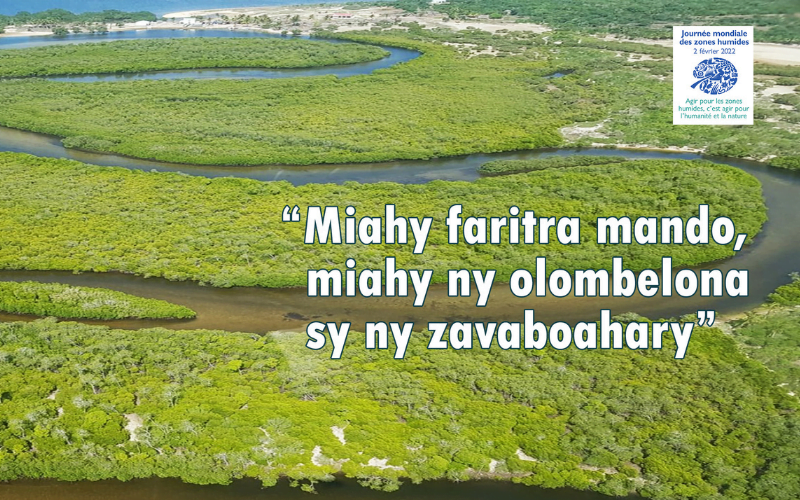
16 of the 21 wetlands (2,147,911 ha) listed on the RAMSAR site are housed in protected areas and thus benefit from conservation activities. 7 of them are part of FAPBM grantees. Other wetlands do not benefit from this protection nor even listed as RAMSAR. In this cyclone season, the celebration of Wetlands Day on 2 February is a stark reminder of the need to provide the means to preserve these areas. Lakes, ponds, peat bogs, watersheds, swamp forests, mangroves, etc. are all wetlands. As such, they house biodiversity, provide water (for livestock, agriculture, electricity, food, etc.) and are buffer zones in case of flooding. The national theme of the 2022 celebration also denounces human activities that cause wetlands loss: “Acting for wetlands means acting for nature and humanity. Do not fill in with soil to guarantee access to water for all, do not destroy to maintain life”. FAPBM supported the …

FAPBM support for the reforestation carried out by the Directorate of Protected Areas (DAPRNE) of the Ministry of the Environment and Sustainable Development (MEDD)

Menabe - Fapbm

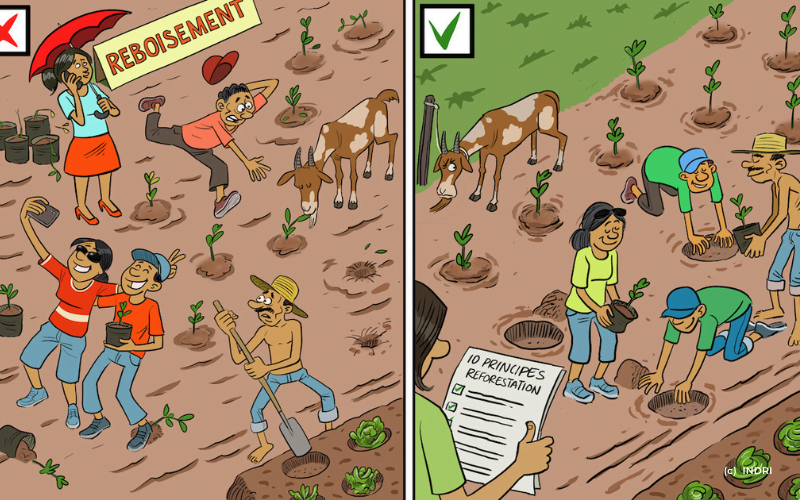
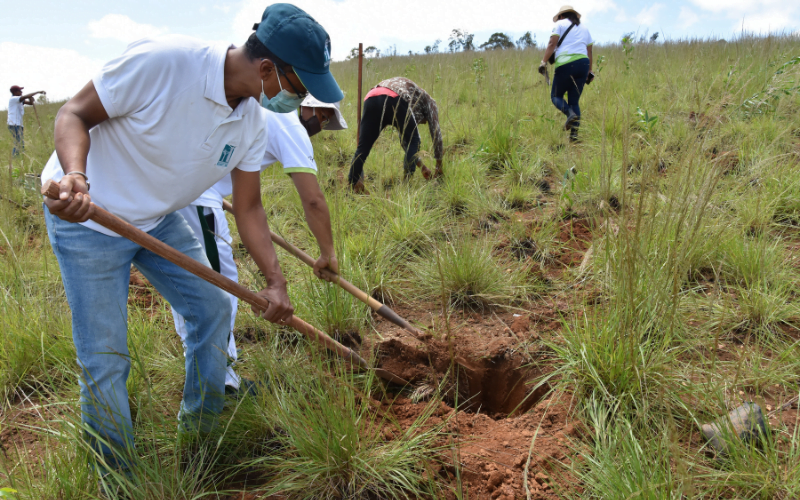
The Directorate of Protected Areas, Renewable Natural Resources and Ecosystems (DAPRNE) has invited its close partners to its annual reforestation. On 11 February 2022, teams from FAPBM led by the Executive Director, Alain Liva Raharijaona, joined the DAPRNE and its partners (among which MNP, Group of Madagascar’s fauna and flora exporters) for this civic duty. Nearly 2,000 plants were planted in the Manankazo forestry station (north of the capital Antananarivo) by the participants. Among the species planted were acacia, tavolo, harongana, afotra, mongy hasina, fanala sopatra, mokaranana, handrarezina. Young plants evolution will be monitored and maintained by the local team of the MEDD. This physical participation – coupled with financial support – is in line with the long-standing collaboration between FAPBM and the MEDD within the framework of improving protected areas management. Most recently, the Director of DAPRNE has joined the Financing Committee of FAPBM’s Board of Trustees. Among other …

Giveaway to support communities

Menabe - Fapbm

At the forefront of protected areas conservation and protection, local communities participate in patrols, restoration activities and are even co-managers of protected areas. More than that, they are taking steps to become less dependent on natural resources. Together, let’s discover these start-ups, whose efforts deserve to be supported. During the month of February, in collaboration with protected areas managers, FAPBM conducted a digital campaign to publicise communities’ achievements. To this end, internet users were encouraged to share publications about these achievements. Some important figures joined the campaign voluntarily, namely: igersmadagascar, Jay L’Exploratrice, Baonjava Monika, Marie Christina Kolo, Mbolatiana Raveloarimisa. We warmly thank the managers who offered the gifts. If you too would like to support the protected areas and their communities in any way, or buy their products, please contact the managers directly: –           Apiculture of Agnalazaha: Fidy Ratovoson fidy.ratovoson@mobot.mg –           Apiculture of Beanka: Radosoa Andrianaivoarivelo aniainodna@yahoo.fr –    …

GEF6-AMP: Strengthening team cohesion to achieve project objectives

GEF - Fapbm

A team building of the GEF6-AMP project implementation consortium was organised in Majunga from 15 to 18 February 2022, with the participation of the MEDD team (which ensures the project technical management) led by Andriambelo Fara Mihanta, Deputy National Project Director, Mr Rémy Ratsimbazafy, Senior Marine Biodiversity Officer from WWF Madagascar (who is in charge of the project technical follow-up) and Elysabeth Razanamiarana, Project Management Consultant from FAPBM (who is in charge of the project financial management). In a few words, GEF6-AMP is a 5-year project, to strengthen the governance of marine protected areas (MPAs) in Madagascar, funded by the Global Environment Facility (GEF). The project has the following objectives: (1) the establishment of an extensive, representative and sustainable network of coastal and marine protected areas and LMMAs (Locally Managed Marine Areas); (2) the establishment of a robust, enabling environment for MPAs and LMMAs, (3) the improvement of management effectiveness …

Menabe Antimena: Soon to be a beneficiary of FAPBM’s annual grants

Menabe - Fapbm

According to the FAPBM prioritisation manual of protected areas, the New protected area of Menabe Antimena (APMA) has been selected to integrate the Foundation’s financing cycle as from 2022. A second meeting with the managers was therefore organised from 16 to 18 February in Morondava to discuss in detail the annual work plans of each. Ranto Randriantsoa (Grants officer) and Bodonirina Nathalie (Research officer) formed the FAPBM team. FAPBM future financing will focus on the parts of the protected area where Fanamby, Durrell and CNFEREF are active. Priority activities for conservation, management effectiveness, and financial sustainability of the protected area were discussed. More importantly, coordination of the activities conducted by the three stakeholders in the field was discussed. An initial due diligence mission has already been carried out by FAPBM to identify the problems and understand the complexity of the situation. Consultations with the various stakeholders have been carried out …

Good practices: Community alert system in Loky Manambato

Menabe Antimena - Fapbm

As one of the sites impacted by climate change – due to the instability of the mangrove salinity as well as water reduction in the lake – the communities of Loky Manambato (North Eastern of Madagascar) are aware of the consequences of illegal fishing and the extension of rice fields on the lake on the resources availability. Fanamby, the manager of the Loky Manambato protected area, has set up a warning system together with members of the communities living along the Lake Sahaka shores, which has led to a complete halt in illegal activities and the arrest of the perpetrators. The local population disavows all the deviant practices orchestrated by ill-intentioned people and collaborates with Fanamby in reporting observed crimes. The success of this system is based on the multi-stage approach: Since 2019: strong awareness rising activities in collaboration with local authorities to strengthen the understanding of the laws, especially …

Platform of DIANA Protected Area Managers (PGAPD): Advocacy force in the region

fapbm

The DIANA region, in the Northern part of Madagascar, has 19 protected areas, 9 of which are financed by FAPBM. With the exception of the protected areas of COMATSA North and South, these protected areas cover more than 800,000 ha. Although they only occupy 40% of the region, each of them provides invaluable services to the region’s populations (889,962 inhabitants in 2018). For example, the Ambodivahibe and Ankivonjy protected areas sustainably manage fisheries resources for the benefit of local fishermen, the Montagne d’Ambre protected area supplies the JIRAMA water reservoirs for the town of Diégo and the water supply of 13 rural communes around the park, and Nosy Tanikely attracts nearly 50,000 tourists per year (before the pandemic). The pressures and threats faced by these protected areas therefore endanger the lives of the region’s inhabitants. Faced with diverging interests in conservation, the DIANA protected areas platform is making the voices …

Madagascar Lemurs Portal secures financing from US foundation Re:Wild

fapbm

Madagascar Lemurs Portal is the most comprehensive information portal on lemurs and has taken many years of hard work to become a scientific reference tool for lemur data. With over 50,000 visitors each year and 490 contributors worldwide, the site is looking to move up a gear and seeks to be more accessible to the layman. Aligned with this vision, the Re:wild Foundation is providing a USD 25,000 financing for the year 2022, with the financial management being entrusted to the Foundation. From the beginning in 2016, FAPBM has been present as a coordinator of the project implementation consortium and financial manager, with the conviction that the availability of biodiversity data is an asset for conservation actions. This financing breathes new life into the project, with the focus now on expanding the community so that the portal can reach its full potential. The aim is to link the portal to …

Monitoring&evaluation and internal control mission in Analalava

Analalalava - Fapbm

An unannounced mission took place in Analalava Community Reserve (Toamasina II District, East of Madagascar) from December 17 to 19, 2021 with the participation of the Internal Control Manager, Evah Ralalarisoa, and the Monitoring and Evaluation Manager, Serge Ratsirahonana. The objective of the mission was to see on the ground the functionality and progress of the activities of the protected area, conducted by Missouri Botanical Garden, the manager. The unannounced missions are part of the monitoring tools of the FAPBM to ensure the proper management of funds entrusted to the management units. The Analalava forest provides raw materials for handicrafts and basketry, a means of subsistence for local communities. It is also home to the springs of the rivers that ensure the irrigation of the rice fields in the lowlands. Since 2017, the new protected area (NAP) has recorded 0 fires. Funding for the FAPBM began in 2012. …

Maximizing the efficiency of funding granted by FAPBM

Analalava - Fapbm

The funded protected area managers were invited to a training workshop on December 14, 2021. As FAPBM will have to monitor its impacts more closely, the funding tools, in particular the terms of the grant agreements, will be strengthened in order to ensure an efficient management of each protected area, of the conservation of biodiversity, and especially to safeguard the local communities. With regard to the efficiency of management, the reform of the funding tools frames all the funding in the Development and Management Plan (PAG) of the protected area. From now on the granting any fund will be conditional on updating this document which defines the strategic axes of the protected area over 5 years. With regard to the activities planned , including those related to the ecological integrity of the protected area, incentive or penalty guidelines will be put in place to ensure the effectiveness of the funded …

Impacts of the Covid-19 pandemic and protected area resilience

fapbm

How did protected areas cope with the pandemic in 2021? During a webinar organized on December 17th, 2021 by FAPBM, a panel of protected area managers shared their challenges over the past 2 years. The courses of action converged on the empowerment and improvement of the communities living conditions. Ms. Claude-Anne Gauthier, Coordinator of IRD-MNHN, Mr. Christian Camara, Country Representative of Missouri Botanical Garden, Mr. Razafindralaisa, MNP Director of Operations, and Ms. Tiana Andriamanana, Executive Director of Fanamby enthusiactically  shared their experiences. The decline in the number visitors or even the absence of tourists has had significant financial impacts: MNP sites have been the most affected, as funds for a proper implementation of monitoring, follow-up and surveillance activities have been depleted. In addition, related ecotourism activities have effectively stopped (guiding, production and sales of local products, etc.), resulting in negative impacts on the household economy. In the new protected areas …

Discovering lemurs!

Analalava - Fapbm

On Friday, December 10, Madagascar Lemurs Portal, the Regional Office of Tourism of Analamanga, the National Federation of Guides of Madagascar and the Department of Anthropobiology and Sustainable Development,  University of Antananarivo, organized a day of mobilization and information on lemurs. In order to sensitize the general public on the importance of lemurs, activities were conducted in the compound of the Regional Office of Tourism.  A tour allowed visitors to travel, learn and test their knowledge of lemurs and close the loop. The program included a photo exhibition accompanied by tourist guides to discover forty species of lemurs still little known by the Malagasy, as well as fun and informative games with the committed support of young students from the Department of  Anthropobiology and Sustainable Development.   The participation of stakeholders such as GERP, Sifaka Conservation, and FAPBM also helped  expose the real threats facing these species, and to highlight …

Launch of the 2022-2026 Strategic Plan of FAPBM

fapbm

As the 2017-2021 FAPBM Five-Year Strategic Plan has come to an end, an external entity was commissioned to conduct an evaluation and support the development of a new plan for 2022-2026. The evaluation found that the overall objective of contributing to the ecological integrity of the funded protected areas was achieved. This overall objective was based on two pillars: a)  increase the contribution of FAPBM to the management costs of protected areas and b) improve the management indicators of the protected areas funded. The efforts made are significant , but so are the challenges. Continuous loss of biodiversity, poor human development, and climate change, these age-old challenges have been exacerbated by the vulnerability inherent to the pandemic. To address these issues, the new 2022-2026 Strategic Plan of FAPBM, presented virtually on December 7, is built on 3 pillars: Enhancing sustainable funding to the Madagscar ‘s Systeme of Protected Area (SAPM) …

45 protected areas to benefit from FAPBM funding for 2022

Aires protégées - Fapbm

Of the 123 protected areas in the Madagascar Protected Areas System (SAPM), 45 will receive annual grants from the Foundation for Biodiversity and Protected Areas of Madagascar (FAPBM) in 2022. The total funding amounts to 10,711,991,923 MGA (USD 2,735,170). The total surface area of the protected areas financed covers 3,231,165 Ha, or 50% of the total surface area of SAPM.   6 new sites will join the network of FAPBM beneficiaries in 2022, namely: Ambodivahibe (managed by Conservation International), Ankivonjy (managed by WCS), Andrafiamena Andavakoera (managed by Fanamby), Ibity (managed by Missouri Botanical Garden), thanks to a capital endowment from the French Development Agency (AFD) in 2020, The National Parc of Lokobe (managed by Madagascar National Parks), Menabe Antimena proected area, under serious deforestation. Discussions are in progress to set up the amount of the funding.   The annual grants to the 45 protected areas will be allocated to the …

Contribution of EUR 45.7 million from German Development Bank (KfW) to sustainably finance protected areas in Madagascar

fapbm

Antananarivo, 6 December 2021- The Ministry of Economy and Finance of Madagascar (MEF) and the German development bank KfW have signed two contracts for financial assistance worth a total of 45,7 million euros for the protection of Madagascar’s biodiversity. This endowment will be used to contribute to the capital of the Madagascar Foundation for Protected Areas and Biodiversity (FAPBM). The income generated by this capital will provide protected areas and local communities with means to sustainably strengthen the fight against the growing pressures on the country’s biodiversity and natural resources. The priority area of German development cooperation in Madagascar is environmental protection, biodiversity conservation and sustainable use of natural resources in the energy and agriculture sectors. Through KfW, the German government has been committed to the sustainable financing of the Madagascar Protected Areas System (SAPM) for more than 30 years, either through direct financing of Madagascar National Parks (MNP) or …

Proud to be a member of :