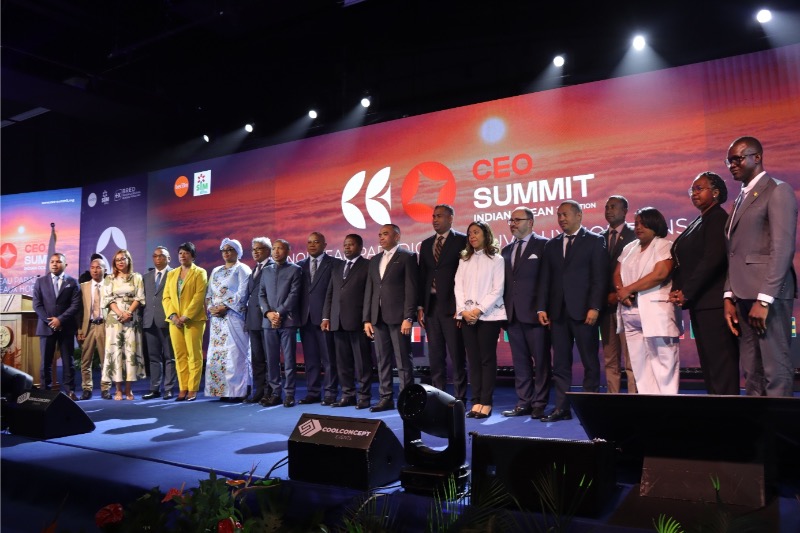
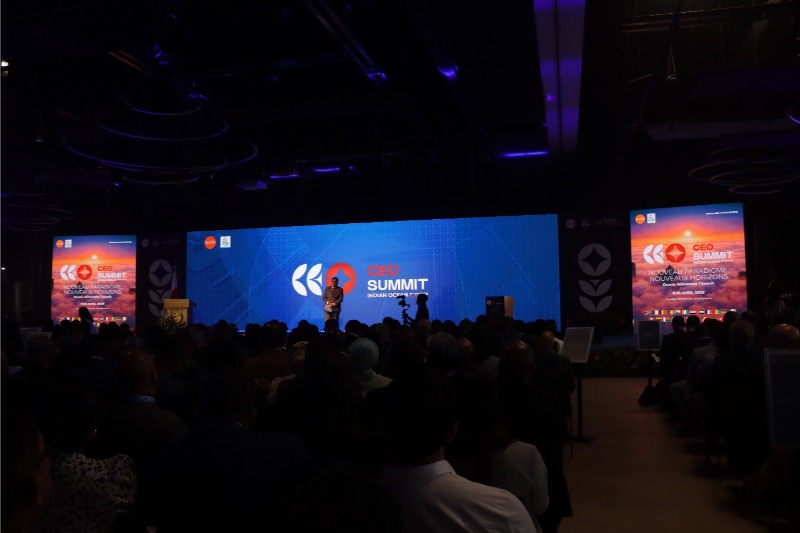
Antananarivo, 9–10 April 2026 – The second edition of the CEO Summit Indian Ocean 2026 brought together economic decision-makers, investors, public institutions and regional partners around a shared ambition: to foster a more innovative, resilient and sustainable development model for Madagascar and the Indian Ocean region.
Driven by a vision to promote the region as a hub of excellence, innovation and economic leadership, the event highlighted the importance of cross-sectoral cooperation and the sharing of experiences in transforming current challenges into concrete and sustainable opportunities.
Rethinking natural capital: an economic imperative
At a time when environmental issues are gradually reshaping global economic models, the CEO Summit provided a forum for discussion on how businesses, financial institutions and public sector bodies can sustainably integrate natural capital considerations into their strategies.
In Madagascar, this issue is of particular importance. Forests, water resources, biodiversity, fertile soils and marine ecosystems directly support key sectors such as agriculture, energy and tourism, as well as the livelihoods of millions of people. Their degradation now represents far more than an environmental issue: it constitutes a major economic risk.
The discussions thus highlighted an increasingly clear reality: pitting economic development against nature conservation is no longer viable. Without resilient ecosystems, it becomes difficult to guarantee competitive agriculture, stable supply chains, water security or a sustainable investment climate.
FAPBM champions a strategic vision for biodiversity
As an institutional partner of the CEO Summit 2026, Madagascar Protected Areas and Biodiversity Fund (FAPBM) played an active role in the discussions, advocating a vision in which conservation and value creation go hand in hand.
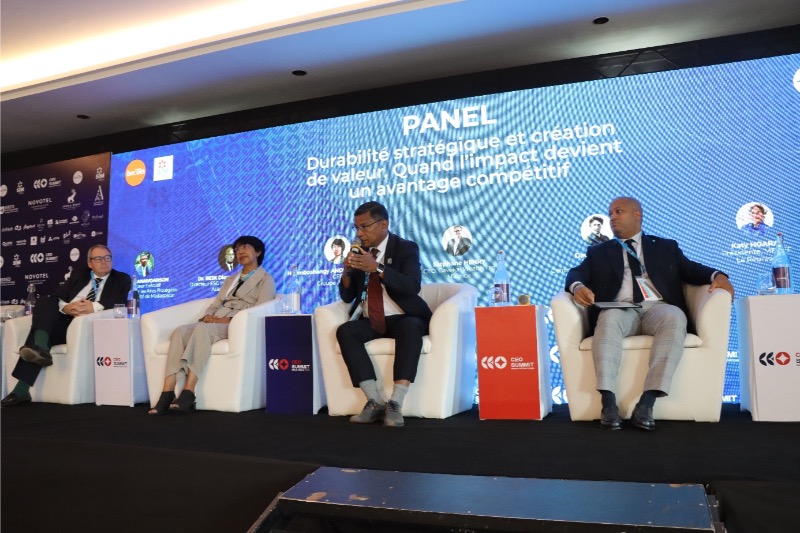
During the panel discussion entitled: “Strategic sustainability and value creation: when impact becomes a competitive advantage”, the Executive Director of the FAPBM, Dr Rija Ranaivoarison, delivered a powerful message on the economic potential of Madagascar’s natural capital:
“In Madagascar, we have a unique opportunity. Our biodiversity is not just a heritage to be protected; it is a strategic economic asset. But to harness its value, we need a paradigm shift: moving from a model of funded conservation to one of structured investment in natural capital.”
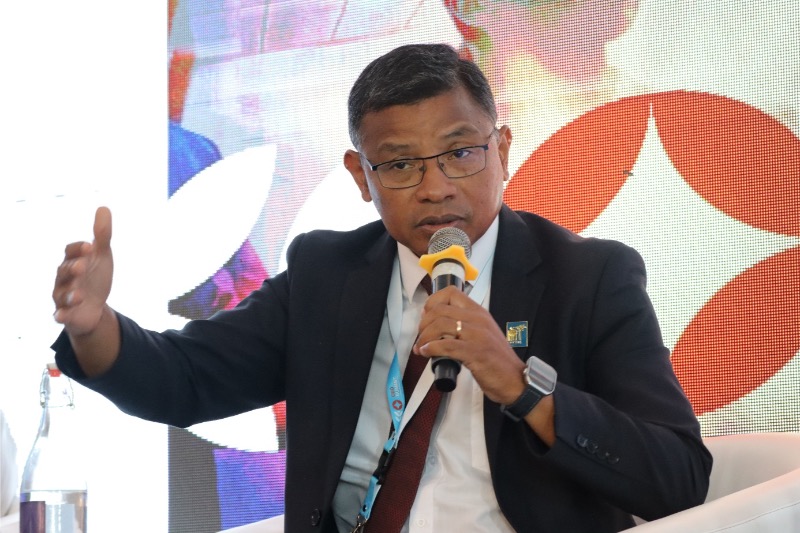
In his speech, the Executive Director of FAPBM also emphasised the need for collective shared responsibility to ensure the success of this transition:
• The State, to set the direction and create a supportive framework;
• The private sector, to transform environmental challenges into opportunities for value creation;
• Financial actors, to channel investment towards sustainable models;
• And organisations such as the FAPBM, capable of bridging the gap between conservation, financing and local impact.
Sustainability is becoming a business strategy
The discussions highlighted in particular that sustainability is now a matter of economic resilience and risk management.
Without a secure water supply, productive soil, forests capable of regulating catchment areas, and resilient ecosystems, it becomes difficult to guarantee competitive agriculture, stable supply chains or a sustainable investment climate.
From this perspective, integrating environmental issues into economic strategies is no longer merely a social commitment: it is now a matter of safeguarding operations, limiting future losses and strengthening business competitiveness.
The CEO Summit 2026 thus helped to bring a key idea to the fore: sustainability is no longer just a nice-to-have; it is becoming a genuine business strategy.
Building bridges between finance and conservation
At the heart of the discussions, FAPBM also emphasised that no single stakeholder can tackle today’s environmental and economic challenges alone. Sustainable transformation requires strong partnerships between public institutions, the private sector, investors and conservation stakeholders.
In this context, FAPBM positions itself as a catalyst between sustainable finance and biodiversity conservation, by promoting mechanisms capable of channelling investments towards positive impacts for ecosystems and local communities.
Blended finance, green bonds, carbon markets, mixed financing: the tools now exist to support the transition to a more resilient and competitive economy.
The challenge now lies in deploying them on a large scale to transform natural capital into a genuine driver of sustainable value creation.
Protected areas: strategic assets for the future
Through its participation in the CEO Summit Indian Ocean 2026, FAPBM strongly reaffirms that protected areas are not merely an exceptional ecological heritage. They also represent strategic assets for the country, contributing to water security, climate regulation, territorial resilience and the well-being of communities.
This vision calls for a shift in perspective on conservation: preserving ecosystems does not mean slowing down development, but rather securing the foundations for sustainable, resilient and inclusive growth.
Towards a new vision of development
This second edition of the CEO Summit thus marked a significant shift in regional economic discussions. It confirms the emergence of a new approach in which the protection of natural capital is becoming a driver of competitiveness, innovation and resilience.
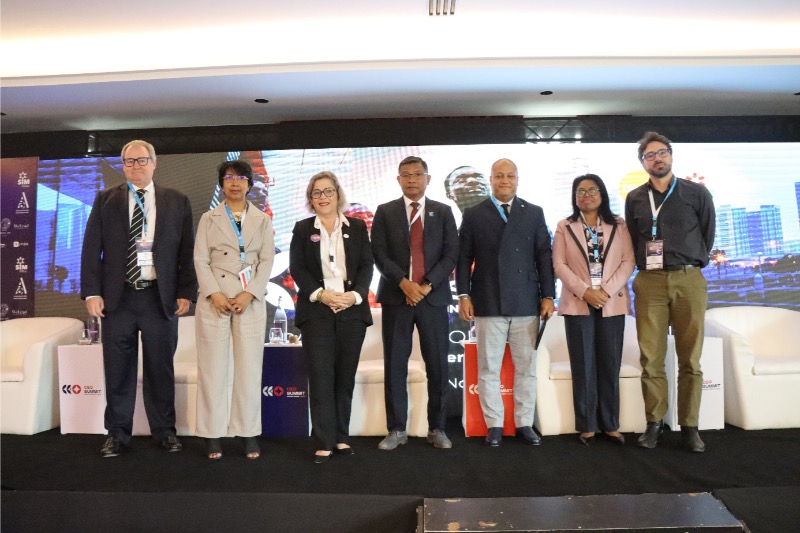
Through its involvement in this forum for strategic dialogue, FAPBM reaffirms its mission: to help build a development model in which the economy and natural capital advance together, for the benefit of present and future generations.
In a global context where economic performance is increasingly linked to the ability of regions to preserve their natural resources, Madagascar possesses an exceptional asset: its natural capital. Transforming this natural capital into a sustainable driver of growth, investment and resilience is now one of the major challenges, but also one of the greatest opportunities, for the country’s future.