FAPBM invests in Miarakap a Malagasy Impact Investment Company

Miarakap - Malagasy Impact Investment Company - FAPBM

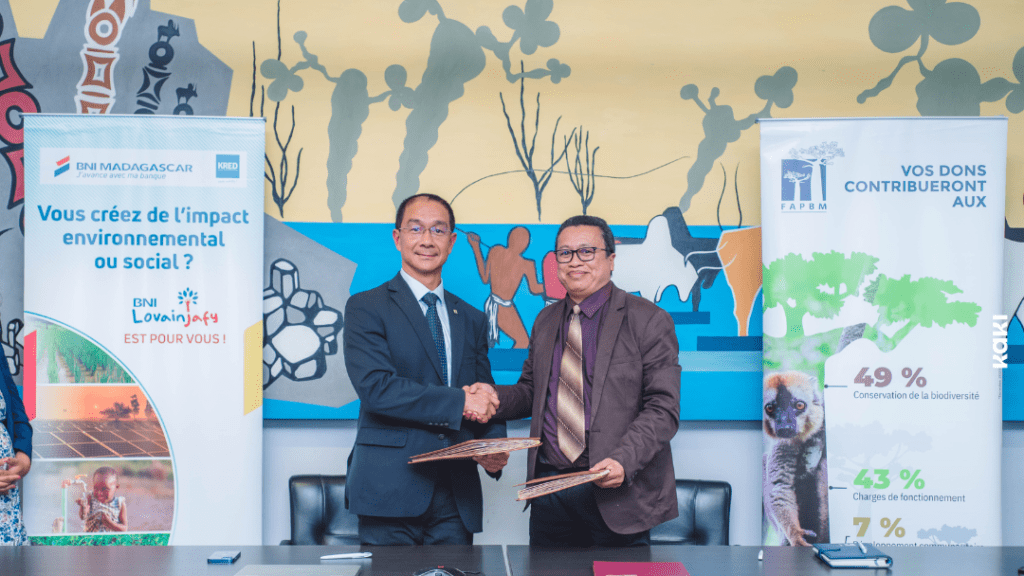
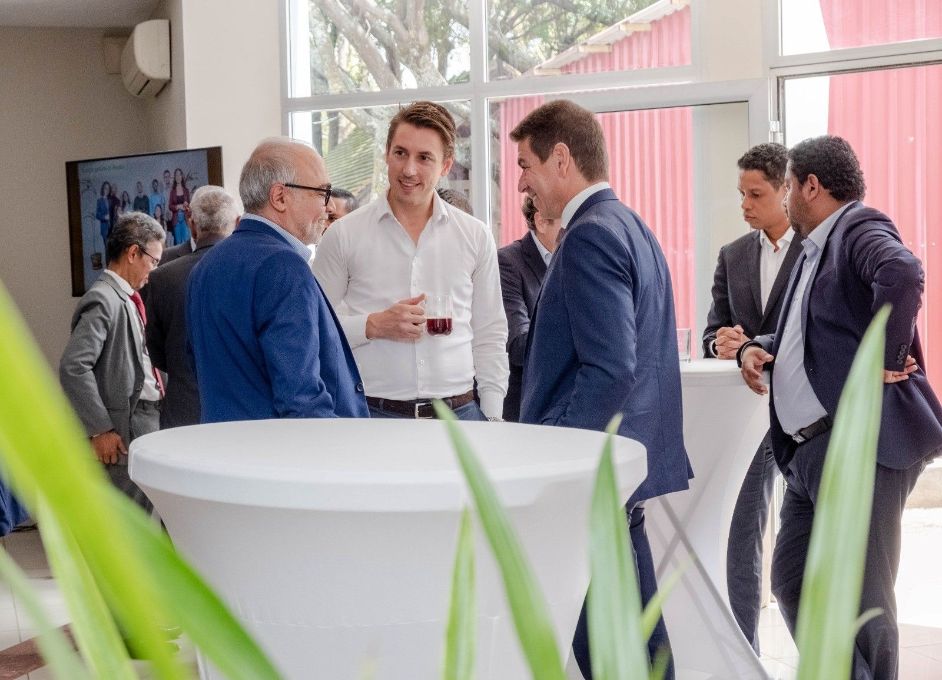
FAPBM invests nearly USD 700,000 in Miarakap impact fund. It is counting on the performance of local start-ups to finance protected areas in Madagascar. Created in 2005 to ensure the sustainability of funding for Madagascar’s Protected Areas System, FAPBM has established a sustainable financial mechanism that benefits 64 of Madagascar’s 123 protected areas to date. Indeed, FAPBM mobilizes capital and invests it on the financial markets. Only the annual revenues generated are used to finance the protected areas. The investments of this capital follow a strict policy of ethics in terms of Environmental, Social and Governance (ESG) criteria. Impact investing to support conservation The investment policy adopted by the Board of Directors requires FAPBM to devote 15% of its capital to environmental and social impact projects, in order to strengthen its environmental and social impact. Beyond the conservation of Madagascar’s unique natural capital, FAPBM is thus broadening its scope of …

Good practices: innovative restoration method in Oronjia, the Waterbox

waterbox à Oronjia - FAPBM

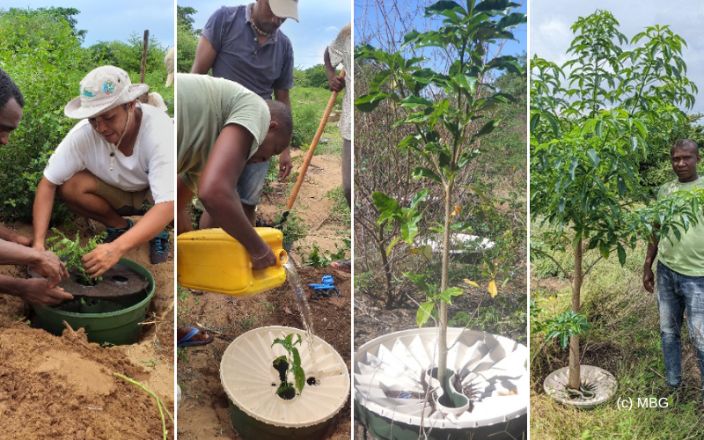
About 71% is the survival rate of young plants planted with the Waterbox method in the protected area of Oronjia (DIANA Region, North of Madagascar), compared to 61% with a traditional method. In 2020, experts from the Tsimoka Association and Missouri Botanical Garden supported by their partners experimented the Waterbox method as part of a restoration plan for the Oronjia site, that has been funded by FAPBM since 2012. The forest ensures maintenance of the water sources that provide water to the local communities (for domestic needs). A quantum leap for the restoration of the degraded forests in Oronjia The principle of the waterbox consists in placing a plastic container, the waterbox, around the trunk of the young plant. This container is filled with water at the time of planting and will continue to capture rainwater and collect condensation water. The reservoir thus formed can provide water to the young …

The equitable sharing of protected area benefits, a KOBABY workshop

Waterbox Oronjia - FAPBM

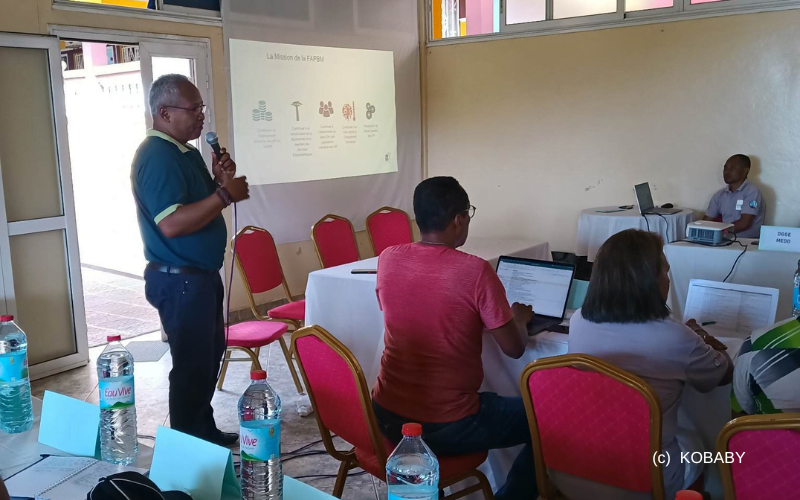
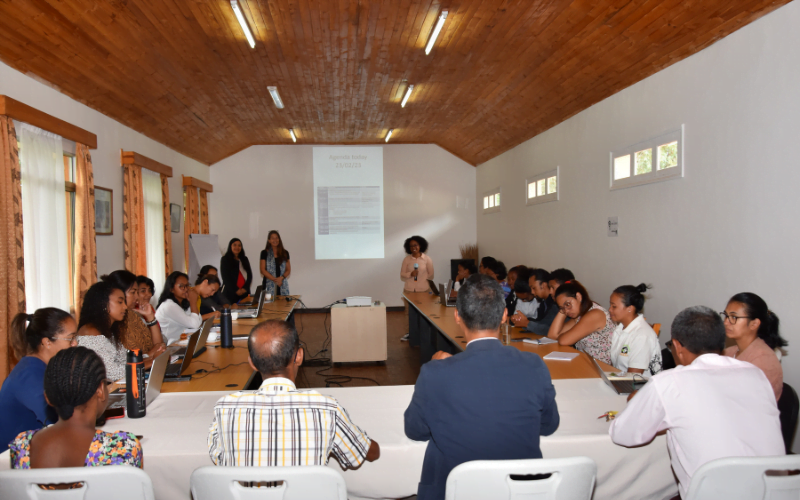
FAPBM, represented by Serge Ratsirahonana, Monitoring and Evaluation Officer, presented the main results of the study on the economic contribution of protected areas, during the workshop on equitable benefit sharing. The workshop was organized by the KOBABY DIANA project coordinated by Hanta Rabetaliana. It brought together stakeholders in DIANA protected areas to assess the progress of governance and management of protected areas (PAs) and activities (especially economic) aimed at strengthening, enhancing and sustaining PAs, which are key to the economic development strategies of rural territories. The DIANA protected areas, an important support for the regional economy The region has 19 protected areas with an estimated surface area of 2,367,026 ha, i.e., 33.4% of the total surface area of Madagascar’s protected areas. Each of them supports and contributes significantly to the rural economy and industries of the region. Here are some examples: In the Manongarivo Protected Area, managed by Madagascar National …

Madagascar: Open to investment for the people and nature!

Waterbox in Oronjia - FAPBM

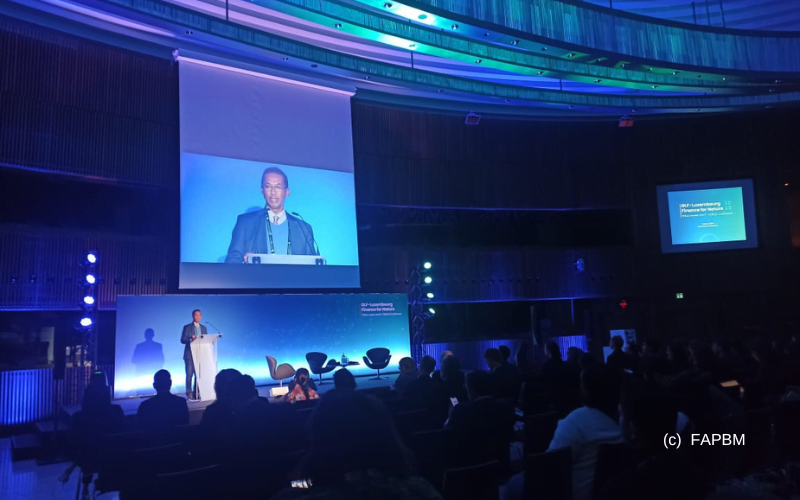
The Madagascar Protected Areas and Biodiversity Fund (FAPBM), currently the largest biodiversity conservation trust fund in Africa, and its main implementing partner, Madagascar National Parks (MNP), chose to participate in the 6th Global Landscapes Forum (GLF) Symposium on March 7, 2023 to share that Madagascar is open to investment in its people and nature. The two organizations were respectively represented by Nanie Ratsifandrihamanana, President of the FAPBM Board of Trustees, Alain Liva Raharijaona, Executive Director of FAPBM, Aroniaina Rajaonarivo, Head of Operations of MNP, and Liliane Parany, Project Manager of MNP. They called for more investment in Madagascar, building on the system of 123 protected areas in Madagascar, which the government has put in place to preserve critical places for nature. Their speeches emphasized (i) the sustainable financing mechanisms proposed by FAPBM (ii) the expertise of protected area managers, (iii) the collaboration between the Government and other stakeholders through the …

Did you know that there are women forest rangers?

Women forest rangers - FAPBM

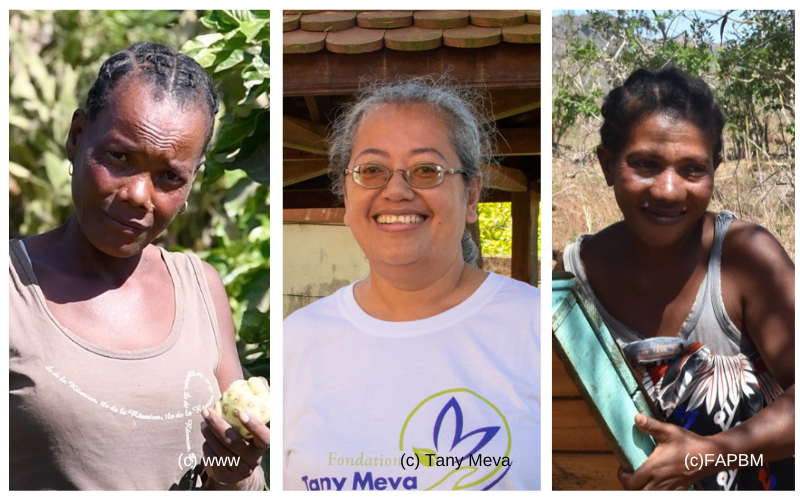
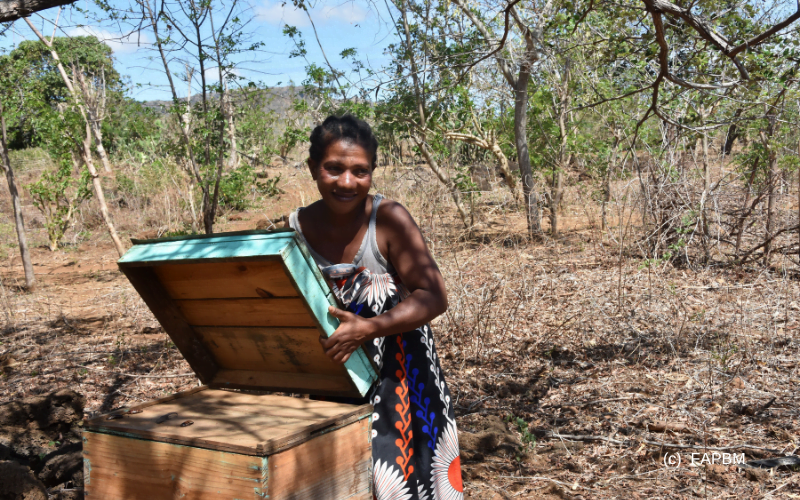
In the heart of the most important places in Madagascar, because of their socio-economic and cultural value, thousands of women work for the preservation of the environment and mobilize grassroots communities. Focus on one of them for the International Women’s Day: Hosonjo from the Montagne des Français protected area. Hosonjo is a forestry officer in the Montagne des Français protected area. She combines this job with her beekeeping and agricultural activities. She plants mainly vegetables and legumes and has about ten hives. The beekeeper is actively involved in the protection of the Montagne des Français, and today holds the position of President of a community association. She joined the group of patrollers in 2020, upon recruitment by SAGE, manager of the protected area. She wanted to set an example for the community. During the interview, she says, “We must mobilize ourselves to lead the patrols and take responsibility.” During the …

World Forest Day – collaborating for change – the Madagascar Coalition for Protected Areas

Baobab - FAPBM

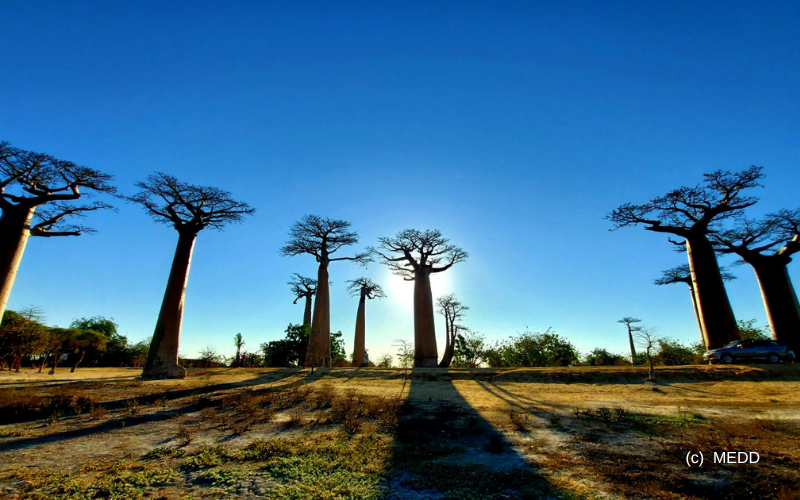
Antananarivo, March 21, 2023 – The Madagascar Coalition for Protected Areas has focused on the successes of forest conservation efforts, as well as the relevance of collaboration to achieve a sustainable economy in Madagascar. Madagascar protects its natural forest assets mainly through its national system of protected areas. Currently there are 123 Protected Areas across the nation, in places that represent the country’s biological diversity, different types of forest habitats, its natural heritage, and the homes of extraordinary wildlife. For years, thousands of Malagasy experts from government, NGOs and communities have been working to create and manage these unique places. Unfortunately, as Madagascar’s economic situation continues a downward trend, these experts and local communities are increasingly challenged in their efforts. Indeed, it is mostly the stories about forest fires and illegal logging that dominate the news. However, stories about forest fires and illegal logging continue to dominate the news. However, there …

International Women’s Day – collaborating for change – the Madagascar Coalition for Protected Areas

International Women's Day - FAPBM

Antananarivo, March 8, 2023 – Today the Madagascar Coalition for Protected Areas, has raised attention to women leaders and -heroes for the environment, and their important contributions to achieve a sustainable economy in Madagascar. Madagascar protects its natural forest heritage mainly through its national system of protected areas. Currently, there are 123 protected areas across the nation, in places that represent the country’s biological diversity, different types of forest habitats, natural heritage, and exceptional wildlife. For years, thousands of Malagasy women working in government, NGOs, and communities have worked to manage these unique places. These women are increasingly challenged in their efforts. Unfortunately, as Madagascar’s economic status continues a downward trend, forest fires, illegal logging, and poaching continue to make headlines. And their successes are not well known. However, many continue to work tirelessly and achieve notable successes for their families and the environment. The Madagascar Coalition for Protected Areas …

World Wildlife Day – collaborating for change – the Madagascar Coalition for Protected Areas

Collaborer pour le changement - FAPBM

Antananarivo, March 3, 2023 – The Madagascar Coalition for Protected Areas has raised attention to the success of wildlife conservation efforts and their relevance for a sustainable economy in Madagascar. Madagascar protects its unique wildlife mainly through its national system of protected areas. Currently, there are 123 Protected Areas across the nation, in places that represent the country’s biological diversity, natural heritage, and the homes of extraordinary wildlife. For years, thousands of Malagasy experts from the government, NGOs and communities have worked to create and manage these unique places. Unfortunately, as Madagascar’s economic status continues a downward trend, these experts and local communities increasingly challenged in their efforts. Their successes are not well known, and instead, negative news about forest fires and species extinction affects investment in solutions. This has provided strong arguments to build the Madagascar coalition for protected areas, as there is ample evidence that protected areas -as agents …

Best practices: communities’ voluntary participation at the Montagne des Français

Montagne des Français - FAPBM

Local communities’ mobilization is quite challenging for protected area managers. This is starting to be no longer the case at the Montagne des Français, a SAGE site, as local communities voluntarily preserve the protected area. SAGE, the protected area manager, has been able to change their behaviour by calling out strategic communication and conservation rewards system. By encouraging voluntary sustainable management of natural resources, manager save money to invest significantly in development activities. Raising awareness through testimonies “To raise communities awareness, explaining nature’s benefit is not enough. Conservation issues must be illustrated by testimonies of people with whom the communities identify. I exposed the consequences of the non-sustainable use of forests, sharing the case of people from Ivonona commune, located 30 km from Antsiranana. In 2014, those people championed in charcoal production. Two years later, following the forest loss, water had become scarce, and communities had to purchase water in Antsiranana. …

Launch of The New Natural History of Madagascar

Communautés des volontaires - FAPBM

FAPBM is proud to have supported Vahatra Association in publishing The New Natural History of Madagascar. The two volumes were officially presented by Professor Steven Goodman on 3 February at the Malagasy Academy. The recipes of Madagascar’s exceptional biodiversity «Separated from Africa’s mainland for tens of millions of years, Madagascar has evolved a breathtaking wealth of biodiversity, becoming home to thousands of species found nowhere else on the planet. The New Natural History of Madagascar provides the most comprehensive, up-to-date synthesis available of this island nation’s priceless biological treasures. Now fully revised and expanded, this beautifully illustrated compendium features contributions by more than 600 globally renowned experts who cover the history of scientific exploration in Madagascar, as well as the island’s geology and soils, climate, forest ecology, human ecology, marine and coastal ecosystems, plants, invertebrates, fishes, amphibians, reptiles, birds, and mammals. This invaluable two-volume reference also includes detailed discussions of …

How to involve the private sector in investing in Madagascar’s protected areas?

Aires protégées de Madagascar - FAPBM

FAPBM has invited actors of the Protected Areas System of Madagascar to the semi-annual meeting of the Coalition for Private Investments in Conservation, or CPIC, on 17 January. Capital flows in conservation finance: The impacts of the Global Biodiversity Framework CPIC is an international coalition of companies and NGOs whose main objective is to scale up investments in conservation. This was a hybrid international meeting, with online participants and only three face-to-face hubs, hosted by WWF in Washington DC, South Pole in London, and FAPBM in Antananarivo. The meeting was opened from the Antananarivo hub by Frank Hawkins, Chairman of the CPIC Executive Committee. In part 1, the meeting addressed the impacts of Kunming-Montreal Global Biodiversity Framework (GBF) on conservation finance. The GBF announces a new era of conservation finance as it encourages resource mobilisation by all actors, especially the private sector. As a prelude to the meeting, Frank Hawkins …

A pathway to support the Green List implementation in Madagascar

Montagne des Français - FAPBM

The Ministry of Environment and Sustainable Development and Madagascar National Parks (MNP) are partnering to support Protected Areas candidates to obtain the IUCN Green List of Protected and Conserved Areas status. FAPBM, through Ranto Randriantsoa, Grants Officer, joined the initiative in November 2022 by providing support to a workshop aimed at accelerating the process. The two-day seminar focused on inventorying Madagascar’s protected areas regarding the Green List criteria, identifying support needs, and defining a roadmap to support candidate sites and the Expert Assessment Group for the Green List (EAGL). IUCN Green List of protected areas The IUCN Green List of Protected and Conserved areas standards is organized into four components of successful nature conservation in protected and conserved areas. The three baseline components are Good Governance, Sound Design and Planning, and Effective Management. They sustain the fourth component of Successful Conservation Outcomes. Seventeen criteria and indicators support the four elements …

The platform of Boeny Protected areas managers: creation in progress

Gouvernorat Boeny - FAPBM

Madagascar experts from conservation organizations Asity Madagascar, DELC, MNP, and MNHN created a platform to protect important areas in Boeny region on 28 October. Supported by FAPBM, the platform’s mission is to integrate protected areas with sustainable regional development. The platform will advocate growing support for protected areas and their neighboring communities at multiple levels. Boeny Region has six protected areas: Antrema, Belemboka Bombetoka, Ankarafantsika, Mahavavy Kinkony Complex, Baly Bay, and Namoroka, which provide key ecosystem services for the local people and the region. To name a few: Boeny’s protected areas values Antrema provides the raw materials used locally for basketry, which is the primary income-generating activity for local women. Baly Bay is a water reservoir important for rice cultivation and a pool of fisheries resources. The “raffia zone” raw materials provide different products, generating income for local people. In Bombetoka Belomboka, the Avicennia marina species provides shelter for silkworms …

Herinirina Andriatiana joined FAPBM

Herinirina Andriatiana - FAPBM

Herinirina Andriatiana joined FAPBM is one of the new staff members who joined the FAPBM team in 2022. Graduated of the Institut National des Sciences Comptables et de l’Administration d’Entreprises, he brings to FAPBM his strong experience within  projects and non-governmental organizations. Before joining the FAPBM’s finance department, he had worked for Madagascar National Parks, one of the managers financed by FAPBM. He successively held the position of Accountant, Coach Accountant, Head of Support and Accounting Orientation and Accountant of the “Project of Climate Resilience through the Preservation of Biodiversity”. He explains his passion for nature: “Having realized the harmful effects caused by pollution, I decided to orient myself and evolve professionally in the environmental sector in order to bring my contribution in the preservation of nature which, in my opinion, must be considered as a duty for each of us. Indeed, to protect the environment is to preserve humanity and its …

64 protected areas will benefit from FAPBM funding for 2023

Financements 2023 - FAPBM

Madagascar Protected Areas and Biodiversity Fund (FAPBM) will fund 15 additional protected areas. Starting in 2023, 64 of the 123 protected areas in the Madagascar Protected Areas System (SAPM) will receive annual grants from FAPBM. The total planned funding amounts to 17.9 billion Ariary (approx. USD 4,428,000). The total area of protected areas funded will cover approximately 5,286,000 ha, or about 70% of the total area of the SAPM. 15 new sites could have been added thanks to an endowment from KFW to the capital of the FAPBM in 2021, and a contribution from Global Environment Facility – Conservation International in 2020. The new sites were selected based on their wealthiness of biodiversity and the threats on it. All sites already funded by FAPBM receive additional funding. In total, FAPBM funding to protected areas will increase by approximately 43% from 2022. This exceptional effort was decided by the Board of …

Internal control missions for the good governance of the funds granted

Internal control missions - FAPBM

Evah Ralalarisoa, internal control officer, and Lova Rakotonirina, internal control assistant, have carried outmissions in the protected areas over the last quarter. These field visits assess the effectiveness of the use of funds granted. The internal audit manual details the modalities of these missions.   The audit missions are generally structured in 3 parts: control of supporting documents for a convincing justification of expenses and interview with the managers concerning the current management structure in the field, the operational management at the site level as well as the regularity of the human resources status and files, and the capacity building of the financial team.   The visited protected areas respect a predefined rotation program except in exceptional cases. During the last quarter,the following were visited: Maromizaha managed by GERP (Eastern Madagascar, Alaotra Mangoro Region): Follow-up of the 2022 funding and inventory of the honey house materials and beekeepers’ equipment and …

Best practices: the fire-watchers in Isalo National Park

Good governance - FAPBM

On the summits of the canyons of Isalo national park (southern Madagascar, Ihorombe and Atsimo Andrefana Regions), Kakaza dominates the massifs wonderfully sculpted by the erosions. Binocular on the eyes, telephone in pocket, he scans the landscape worthy of a western. The sclerophyllous forest, the savannah, the trees along the watercourses, they all pass by. Scrupulously, he watches for the slightest smoke.   In Madagascar, the war against fire is a top priority for protected area managers. If fires were controlled, protected area management would be easier, donors would be more supportive, and funds would be more secure. Every year, managers must be creative in preventing and managing fires. In the Isalo National Park, an important provider of foreign currency at the national level, Madagascar National Park has set up an early warning system. Focus on these firemen of the shade! The fire-watchers, the first link in the fight against …

New collaborators within FAPBM

FAPBM

FAPBM is proud to introduce to you the talents that have joined in 2022. At the Executive Management level, Mikanto Rambeloson, Financial Assistant and Lova Bryand Rakotonirina, Internal Audit Assistant have strengthened the team.   At the Board of Trustees, Vice President Ratafika Dimbiniaina has resigned as a trustee, for professional reasons. He has been replaced as Vice President by Mr. Bruno Rajaspera. And a new trustee, in the person of Mr. Alexis Befeno has joined FAPBM Board of Trustees. We invite you to discover them.   Alexis Befeno, Trustee   Currently team leader in the Industry Division of PROPARCO, a subsidiary of AFD Group dedicated to the private sector. He has extensive experience in portfolio management and business development. He is actively involved in the promotion of entrepreneurship in Madagascar, notably through the mobilization of investors.   Alexis Befeno has a Master of Business Administration from ESSEC Business School …

FAR for Mandrozo with a view to support the economic recovery of fire victims

Lac - FAPBM

Through the funding of a Support Fund for Strengthening, FAPBM will be able to support the members of the Veromanga grassroots communities of the Mandrozo protected area (Western Madagascar, Melaky Region). On September 24, a terrible fire deprived 40 households of their homes. To provide economic support to these impoverished communities, the manager, The Peregrine Fund (TPF), has requested funding support from FAPBM.   Supporting communities, supporting the forest   Economic support was needed to prevent possible the possible unsustainable uses of the forest by the affectedpeople. The need was such that the fishermen affected by the disaster in Veromanga risked overrunning the fishingclosure period scheduled until November 15. TPF offered basic commodities to the population for their most urgent needs, thanks to the grants.   Part of the grants was thus devoted to the provision of building materials. As for timber, the manager will support the communities to obtain …

FIS for the Corridor-Ankeniheny-Zahamena (CAZ) to strengthen the protected area security

Conservation - FAPBM

FAPBM has granted funding under the Special Intervention Fund to the CAZ protected area (Eastern Madagascar, Atsinanana Region). This funding aims to put an end to illegal quarries opened inside the protected area, in the forests of Ambohibe and Bekorakaka. The threat of deforestation caused by this illegal mining is such that the CAZ’s Joint Control Organization (OMC) has had to request additional resources to continuously secure it on a continuous basis.   The importance of the Ankeniheny-Zahamena Corridor   The CAZ Forest is located on the eastern borders of the Vohitra River which feeds the Andekaleka hydroelectric dam. This dam provides energy to Antananarivo, Moramanga and Andasibe. It is also connected to the Toamasina power grid, providing access to energy along an axis serving agro-industrial, mining and port activities.   When it was built, Andekaleka had a capacity to produce 100 MW of electricity. This capacity has been progressively …

Proud to be a member of :