What if protecting a protected area were no longer enough ?
In Madagascar, biodiversity, the climate, water and people’s livelihoods are deeply intertwined. Yet, in the face of the effects of climate change, growing pressure on natural resources and the fragmentation of conservation efforts, sustainably preserving this exceptional heritage now requires a change in perspective.
It is against this backdrop that a new vision of conservation is emerging : the Landscape approach.
More than just a new method, this approach represents a genuine paradigm shift. It calls for us to look beyond the boundaries of protected areas and consider entire territories where ecosystems, communities, economic activities and conservation stakeholders are closely interconnected.
Because protecting nature also means protecting everything it makes possible.
Scaling up to meet today’s challenges
For several decades, conservation efforts have focused primarily on individual protected areas.
This approach has helped to preserve natural areas of inestimable value. But today, the challenges extend far beyond the administrative boundaries of a park or reserve.
Water flows from one territory to another.
Species move between different habitats.
Watersheds supply water to thousands of villages
Agricultural activities, fishing, tourism and the effects of climate change extend beyond the boundaries of protected areas.
The Landscape Approach therefore proposes a different way of thinking about conservation: at the scale of large ecological units where biodiversity, climate, the economy and people function as a single living system.
This approach helps to preserve ecological connectivity, strengthen the resilience of local areas and address environmental, social and economic challenges simultaneously.
Three landscapes, one shared ambition
In Madagascar, this approach is being implemented across three priority landscapes covering more than nine million hectares of ecosystems of global importance.
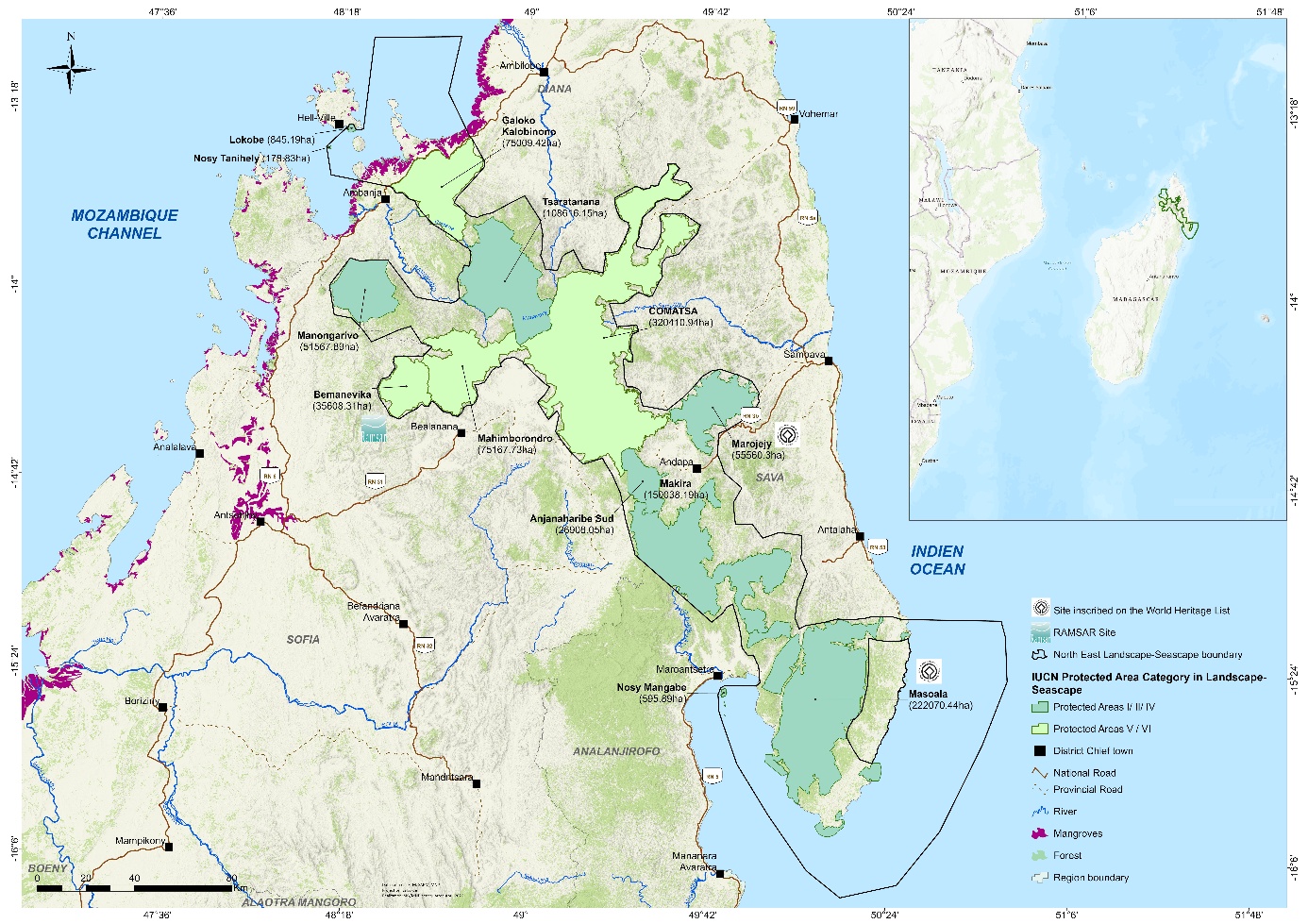
The North-East : where the forest also supports the economy
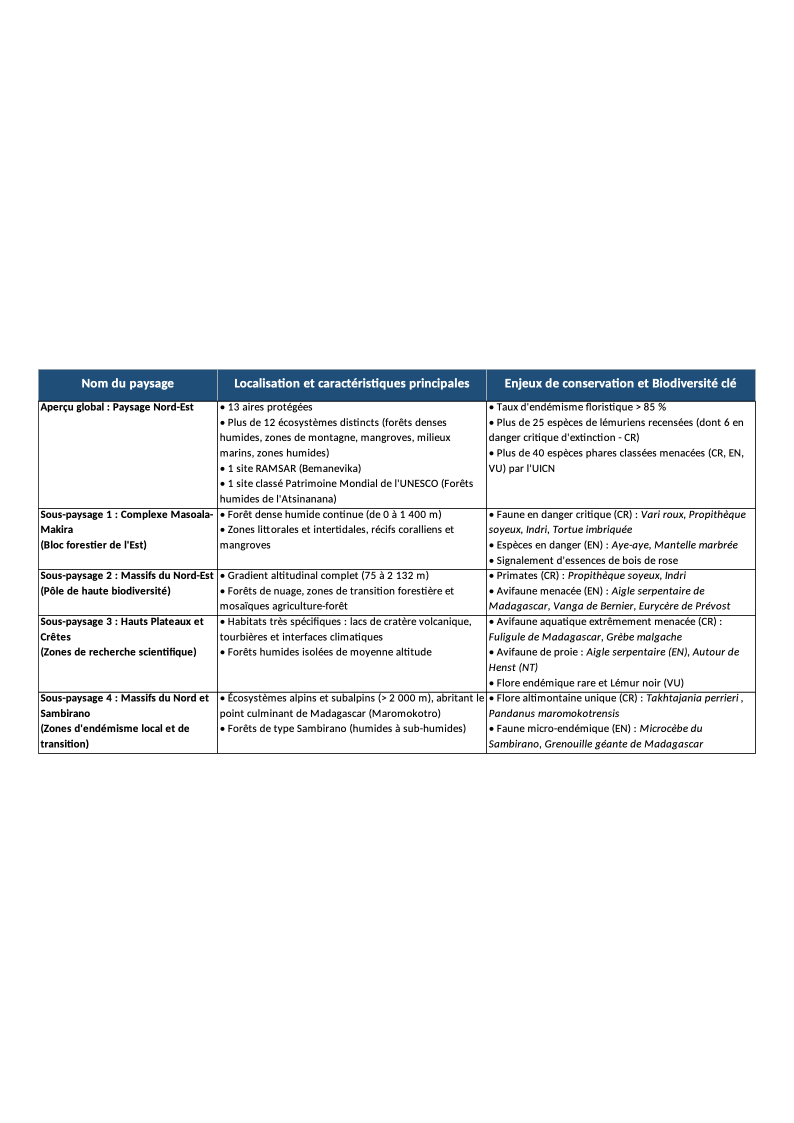
Covering more than 2.4 million hectares, the north-eastern landscape is home to some of Madagascar’s largest protected areas, including Makira, Masoala and Marojejy.
Situated at the heart of the SAVA region – the world’s leading vanilla-producing area – it perfectly illustrates the link between forest conservation, water regulation, agricultural production and community livelihoods.
See the technical data sheet in Appendix 1.
The South-East : preserving forests, preserving food security
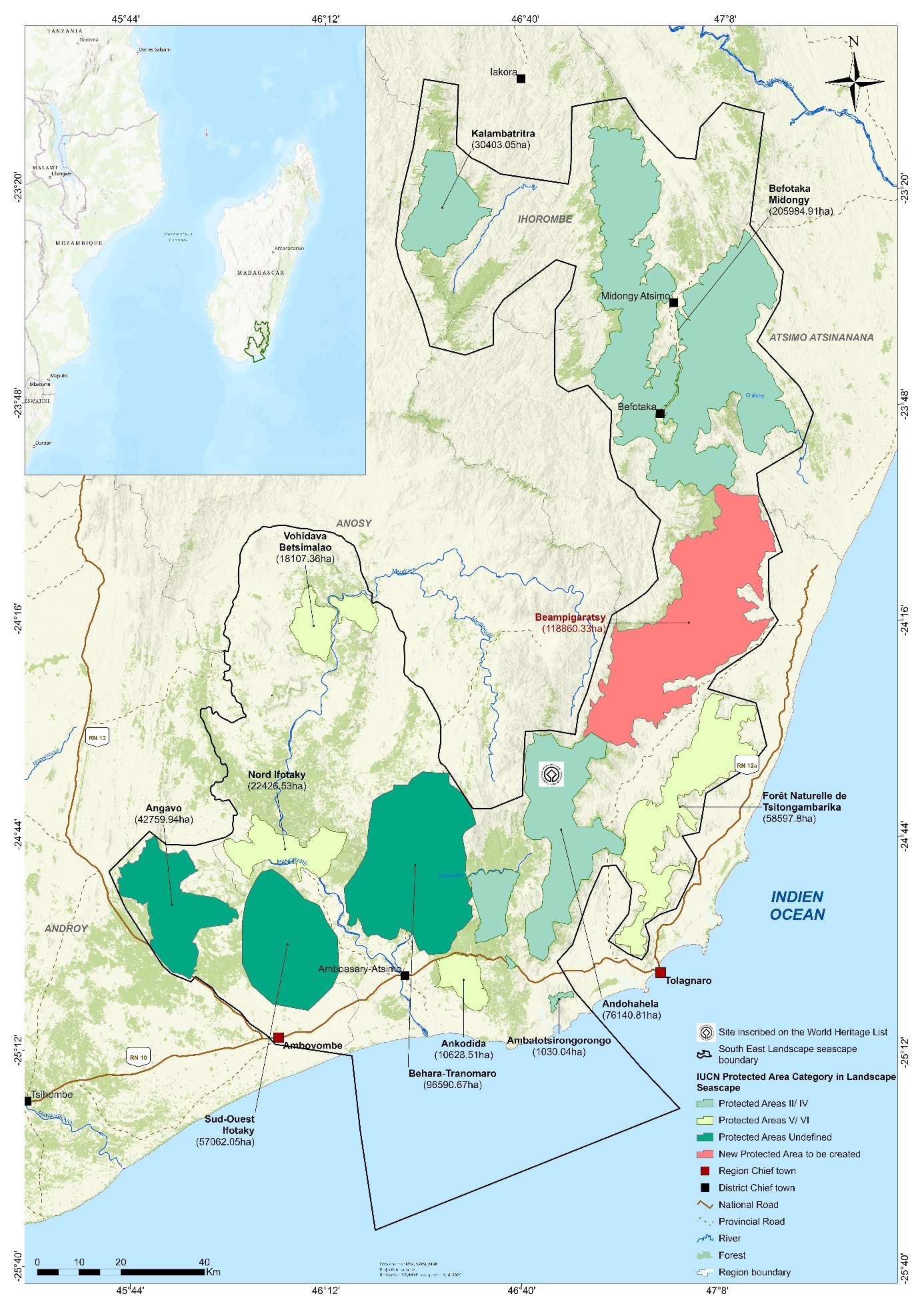
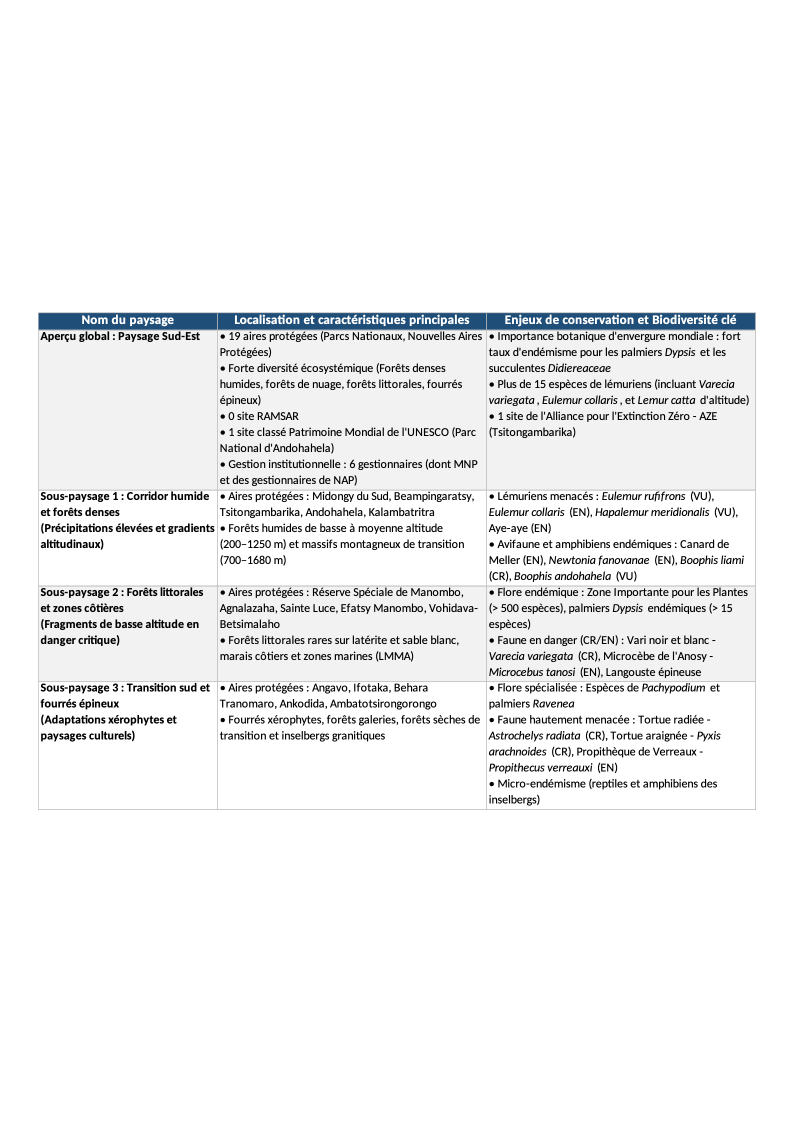
The landscape of the South-East covers nearly two million hectares, linking tropical forests, coastal areas and other complementary ecosystems.
A veritable natural water reservoir, it plays a crucial role in regulating water resources, soil fertility, agricultural production and the resilience of communities in the face of climate-related hazards.
See the technical data sheet in Appendix 2.
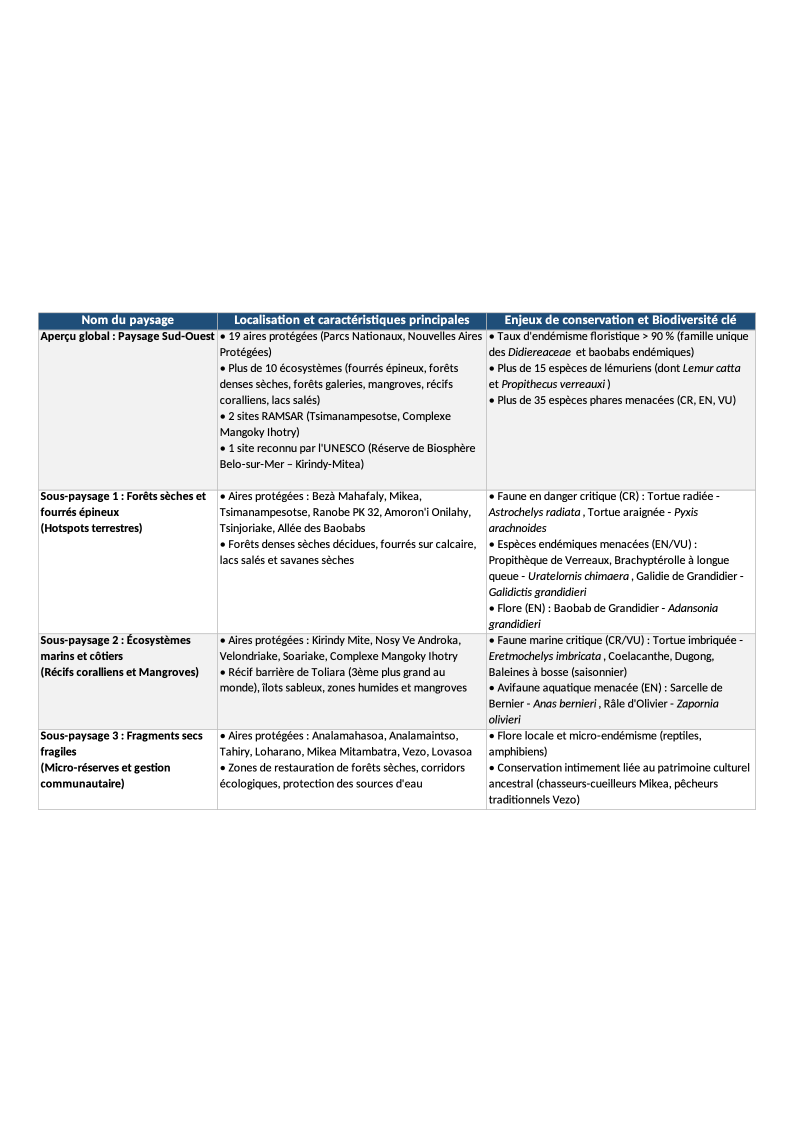
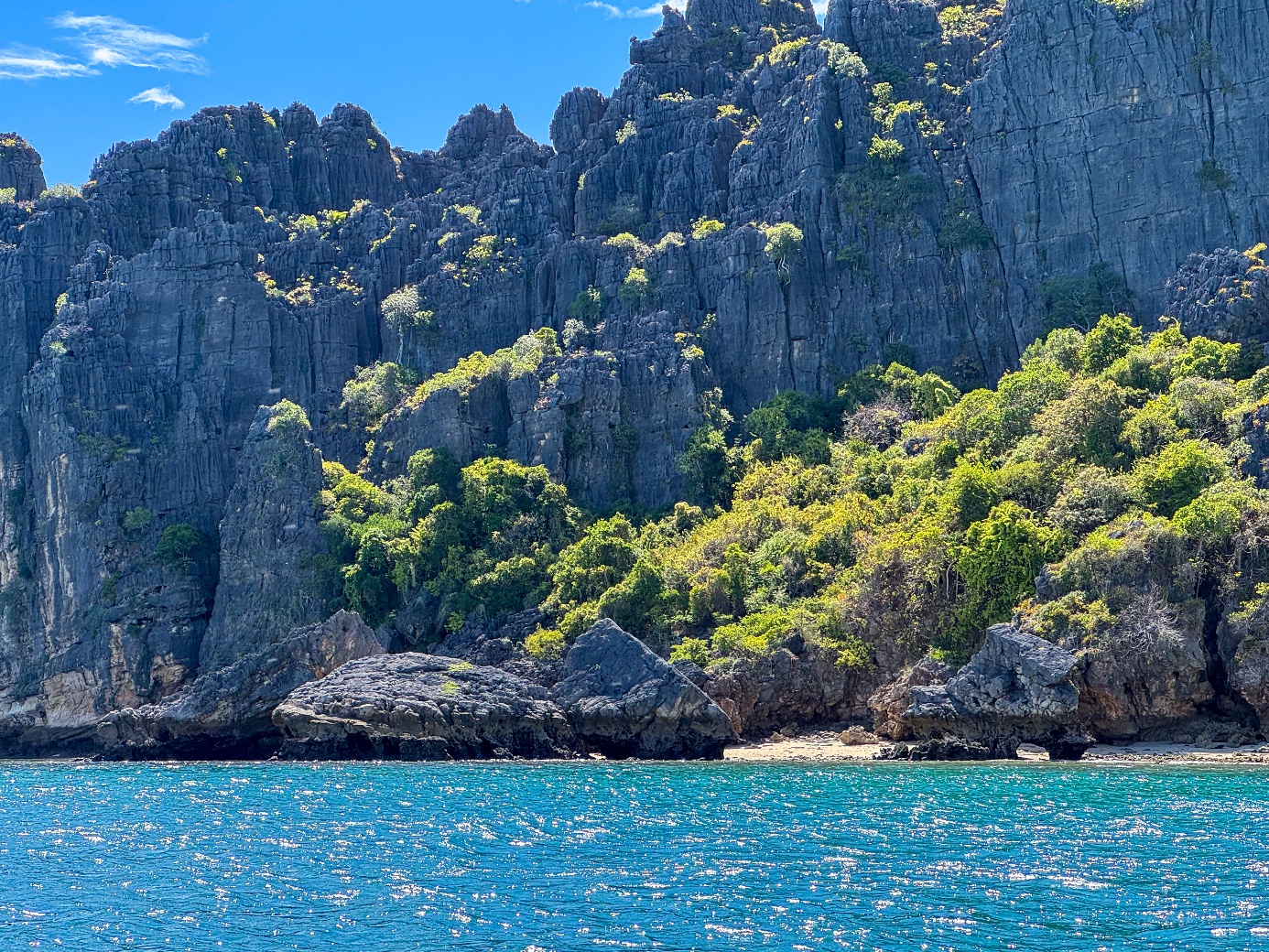
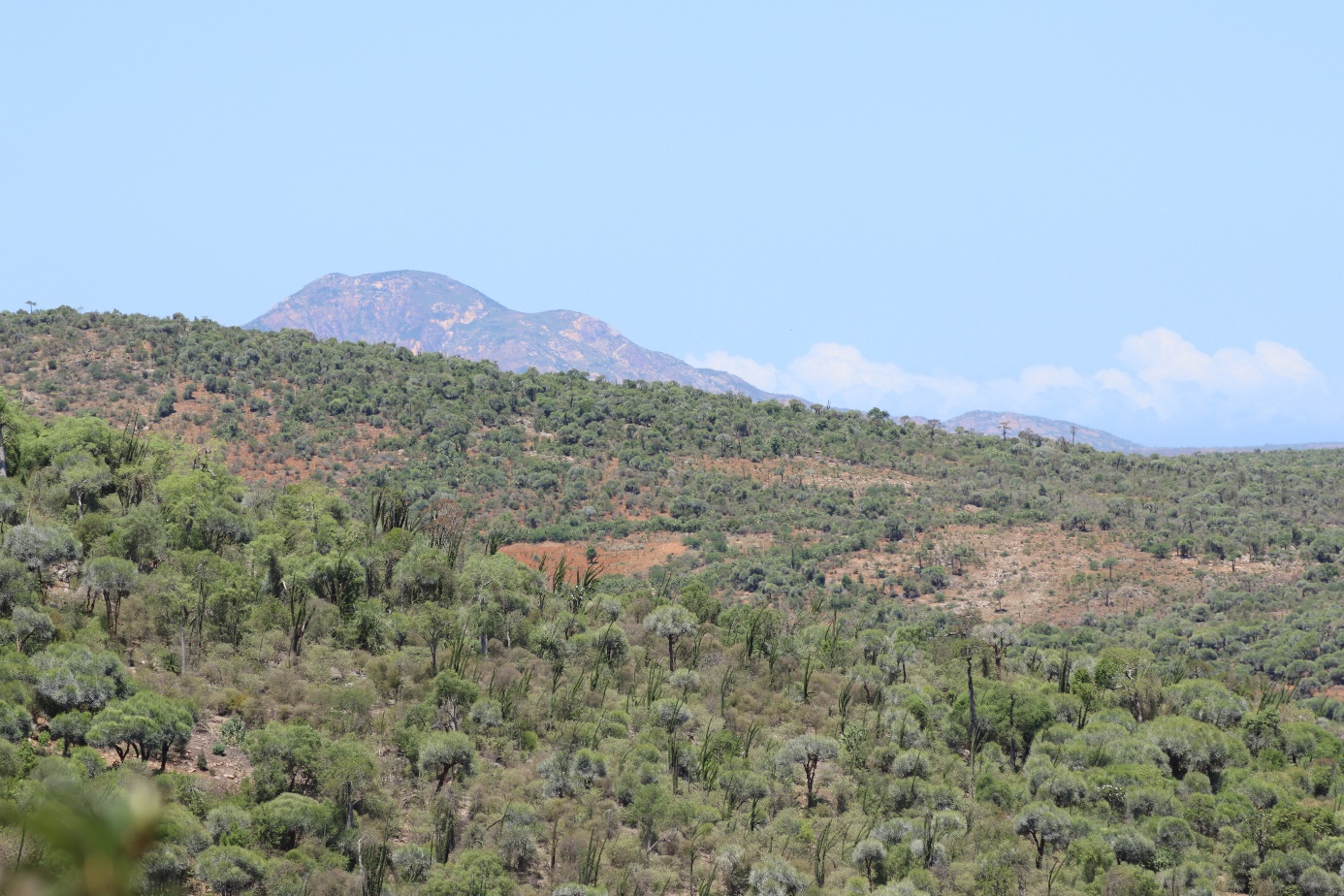
The South-West : a unique continuum between land and sea
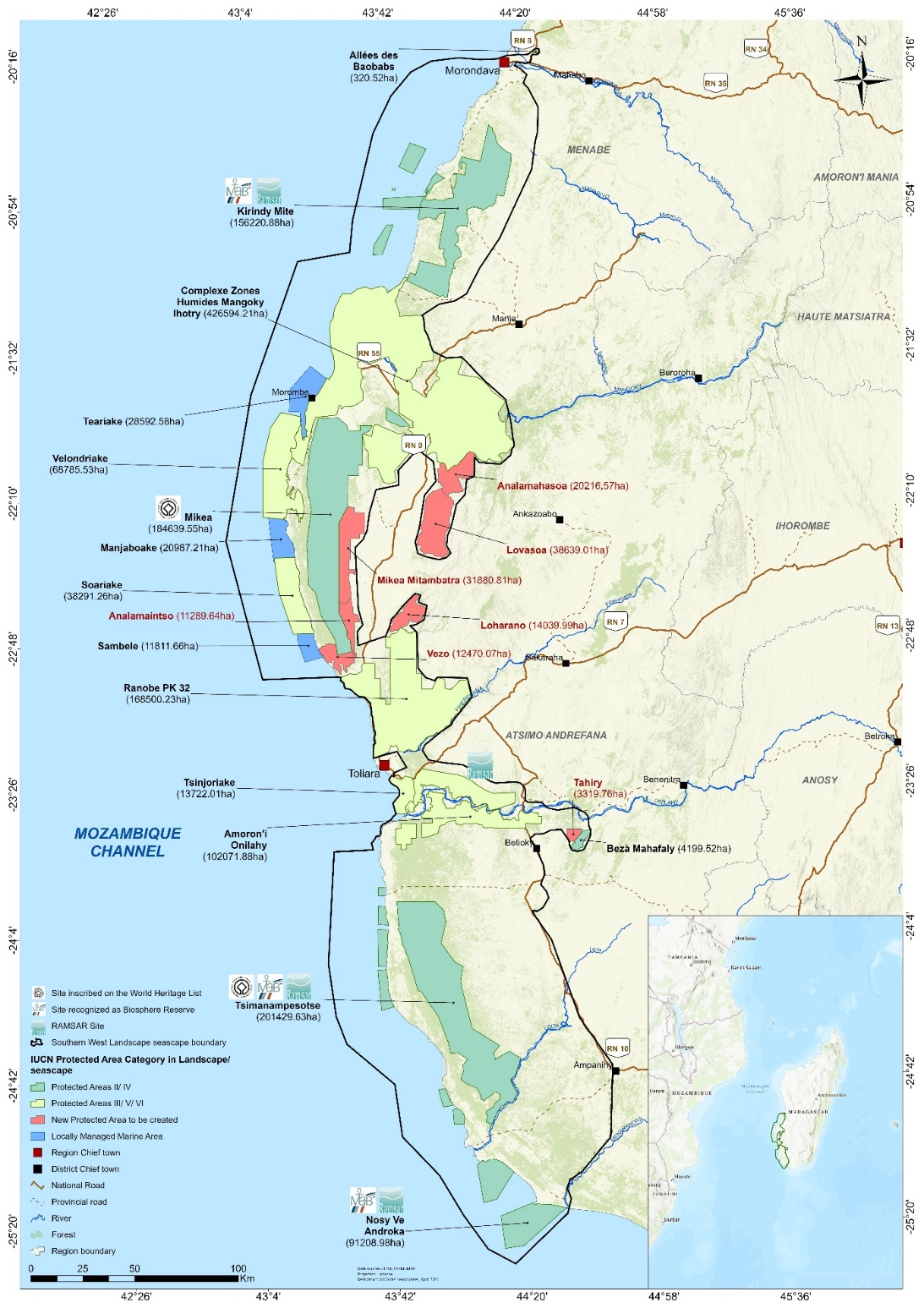
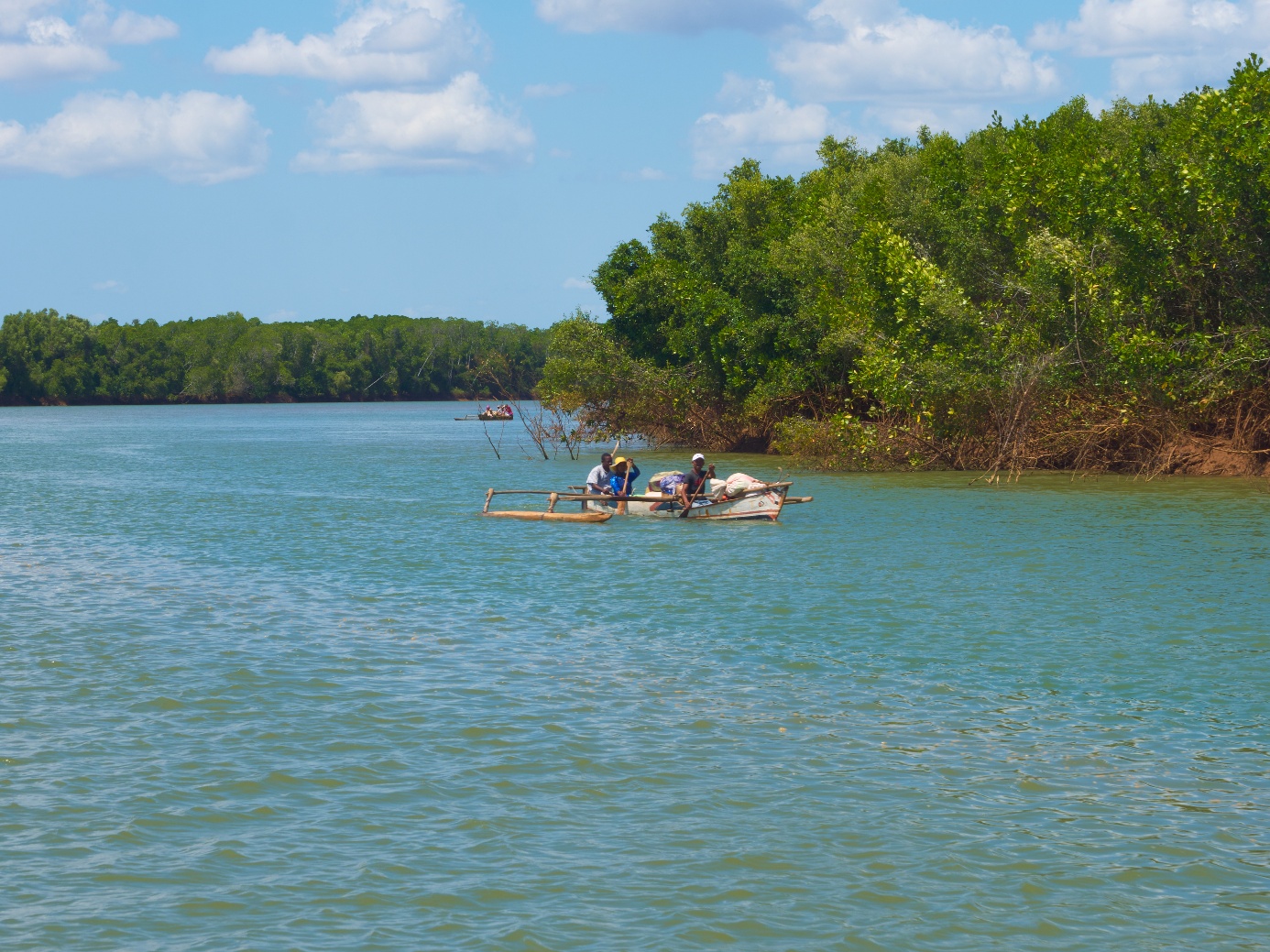
The landscape of the South-West brings together dry forests, mangroves, coral reefs and marine ecosystems, forming an exceptional ecological continuum.
In this region, which is particularly vulnerable to droughts, preserving ecosystems also means safeguarding fish stocks, access to water and the livelihoods of local communities.
See the technical data sheet in Appendix 3.
A systemic approach : protecting nature, strengthening local areas
The landscape approach is based on a firm conviction: biodiversity cannot be separated from human development.
Landscapes provide essential services every day:
- They supply water to communities ;
- They regulate catchment areas ;
- They maintain soil fertility ;
- They support agriculture and fisheries ;
- They store carbon ;
- They mitigate the effects of climate change.
In other words, they are vital sources of life, on which the well-being of millions of Malagasy people depends.
Preserving these landscapes therefore means protecting both the country’s natural heritage and the conditions necessary for its development.
Innovating in the way we work
The innovation of the Landscape approach lies not only in its geographical scope.
It also transforms the way in which conservation stakeholders collaborate.
For a long time, projects were often developed separately, with distinct funding and initiatives that were sometimes scattered across the same area.
The Landscape approach offers a different dynamic: bringing together all the stakeholders who shape these areas around a shared vision.
Managers of protected areas, national and international organisations, local communities, public institutions, researchers, the private sector, and technical and financial partners are invited to pool their expertise to develop collaborative solutions.
This partnership-based approach helps to strengthen synergies between initiatives, pool knowledge, avoid duplication and focus efforts where they have the greatest impact.
A new way of investing in conservation
The Landscape approach also brings a fresh perspective to the way investments are conceived.
Rather than funding a series of independent projects, it promotes coordinated investments led by consortia of stakeholders and financial partners who share the same ambition.
Donors no longer simply support a specific organisation or project.
They are part of a collective effort in which each investment reinforces those of others.
This collaborative approach improves the coherence of interventions, enhances the leverage of funding, promotes complementarity between partners and maximises outcomes for both biodiversity and local communities.
Investing in a landscape means investing in a shared vision that can bring about lasting impacts on a large scale.
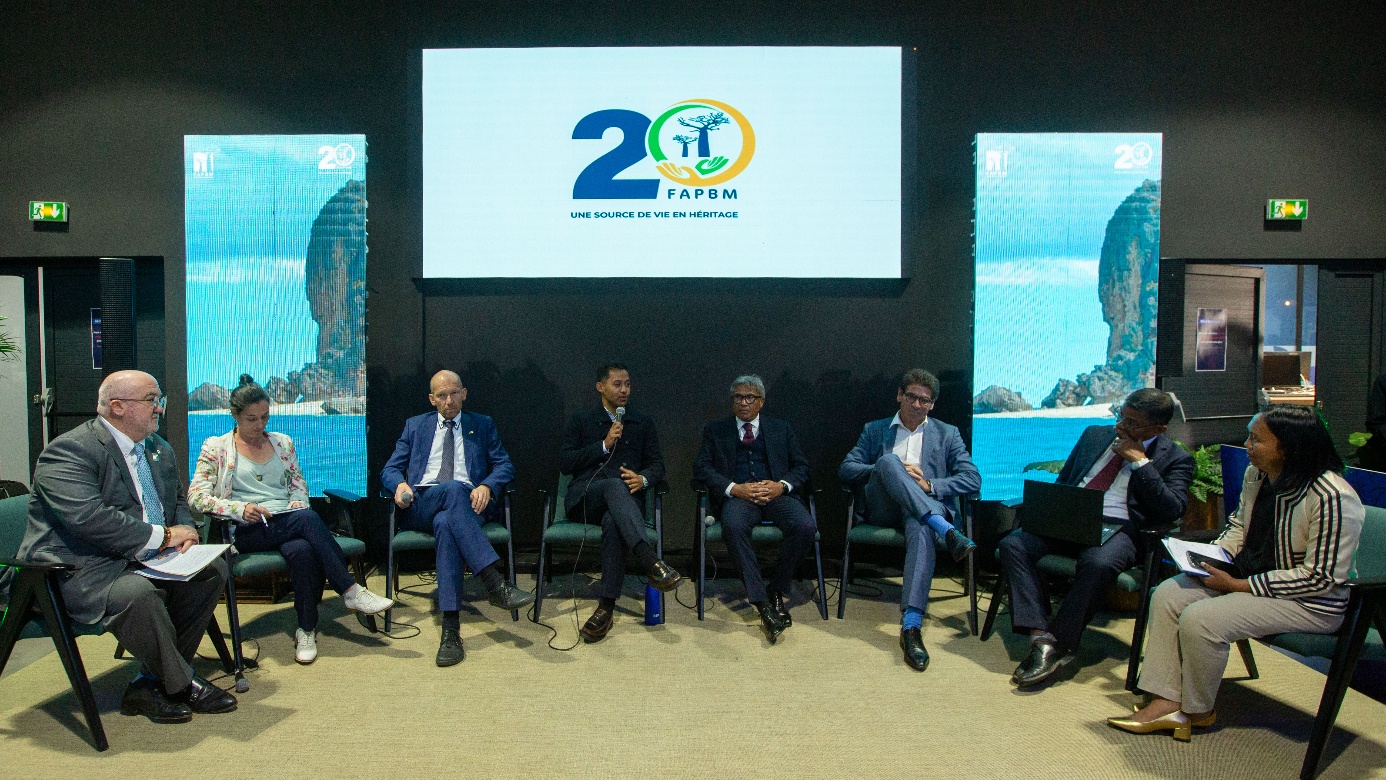
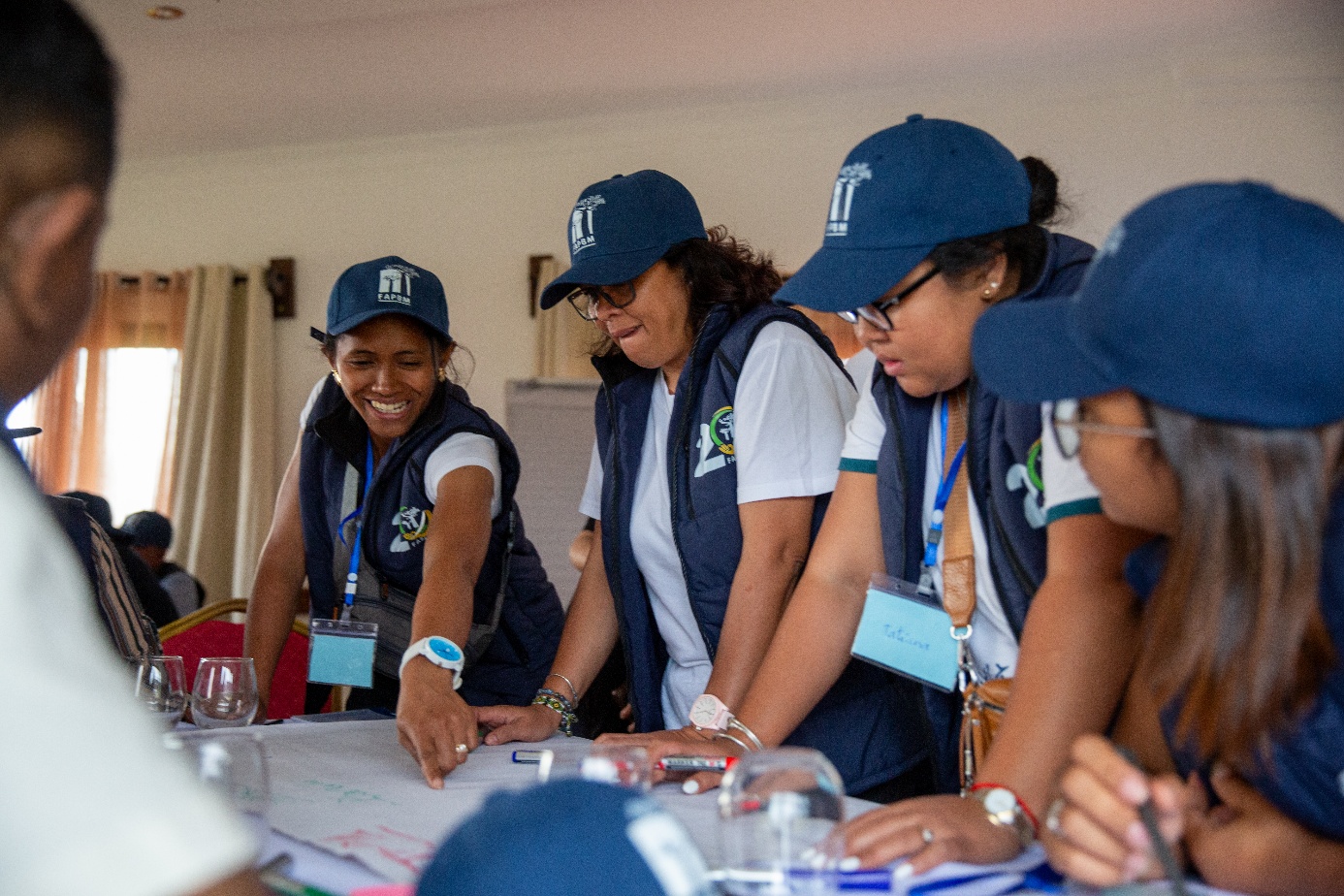
FAPBM : a catalyst for partnerships to build resilient landscapes
For over twenty years, Madagascar Protected Areas and Biodiversity Fund (FAPBM) has been providing sustainable funding for the country’s protected areas.
Today, it is supporting this new generation of conservation by acting as a catalyst for partnerships.
Through its role as a national trust fund, FAPBM promotes collaboration amongst stakeholders around a common landscape-scale conservation strategy.
It helps to mobilise long-term investment, build the capacity of national organisations, encourage collaboration between institutions, and create an environment conducive to the emergence of genuine conservation consortia.
This approach enables a shift from a project-based funding model to one of collective investment in living landscapes, where biodiversity, communities and climate resilience are addressed in an integrated manner.
It also paves the way for innovative nature financing mechanisms. By working at the landscape level, Madagascar is creating an enabling frameowork for the development of solutions such as carbon credits, payments for ecosystem services, impact investment, private-sector partnerships and blended finance. These instruments will complement public and philanthropic funding, helping to ensure the long-term sustainable management of these landscapes.
A crucial moment to take action
Madagascar is now at a turning point.
The priority landscapes have been identified.
Partners have been mobilised.
Solutions are available.
The challenge now is to mobilise investment on a scale commensurate with the challenges, capable of supporting a shared vision and delivering sustainable impacts on a large scale.
For investing in Madagascar’s landscapes is not merely about preserving biodiversity that is unique in the world.
It means safeguarding water resources, supporting local economies, building climate resilience, protecting the livelihoods of millions of people, and building a future where nature and communities thrive together.
The Landscape Approach thus paves the way for a new generation of conservation: conservation that operates on a different scale, brings stakeholders together, unites partners around a shared vision, and makes long-term investments in landscapes, for the benefit of both nature and local communities.
Appendix 1 : North-East Landscape Technical Fact Sheet
Appendix 2 : South-Eastern Landscape Technical Fact Sheet
Appendix 3 : North-Western Landscape Technical Fact Sheet