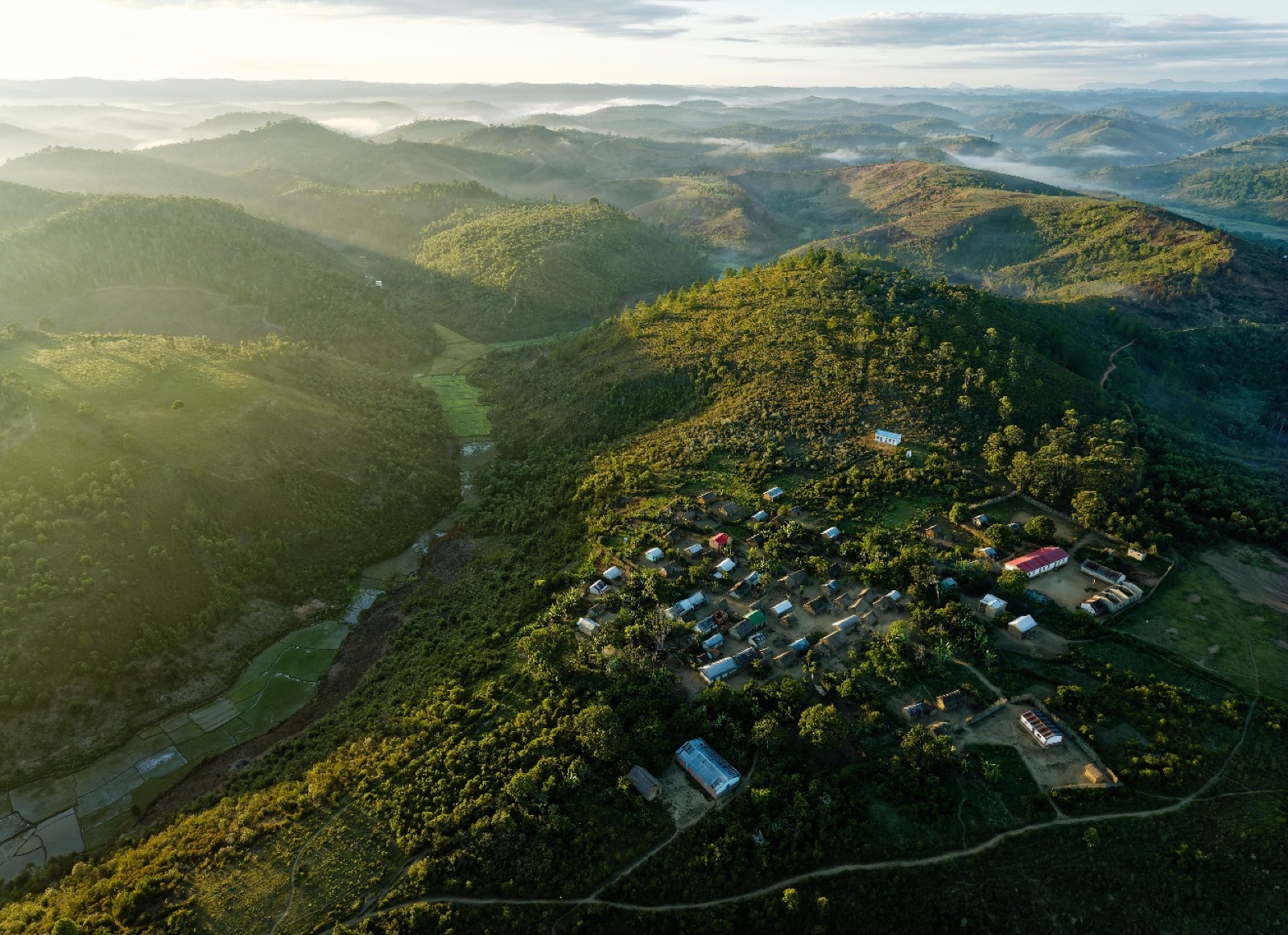
Madagascar is home to biodiversity found nowhere else: more than 80% of its species are endemic, its forests regulate watersheds, its soils feed millions of families and its marine ecosystems sustain coastal fisheries. For a long time, this wealth was seen as a heritage to be protected ‘on the margins’ of the economy, almost in opposition to development. A paradigm shift is now under way: nature is no longer viewed as a constraint, but as a strategic economic asset. Yet this shift raises a fundamental question: what happens when this asset deteriorates and, above all, who actually bears the cost? Understanding this turning point means grasping one of the most decisive challenges for the country’s future.
What do we mean by ‘natural capital’?
Natural capital refers to all the resources and ecosystems that provide services essential to life and to the economy: fresh water, fertile soils, forests, mangroves, reefs, pollination and climate regulation. Like financial or human capital, it yields ‘interest’: the ecosystem services on which agriculture, energy, health and food security depend.
The key difference lies in its fragility. Poorly managed financial capital can be rebuilt; a destroyed ecosystem can take decades to recover, if it is not lost for good. In a country such as Madagascar, where a large share of the population depends directly on natural resources, preserving this capital is not an ecological luxury: it is a prerequisite for economic security, social stability and national sovereignty. In other words, the question is no longer simply how much conservation costs, but how much inaction costs.
From constraint to strategic asset: a misconception to correct
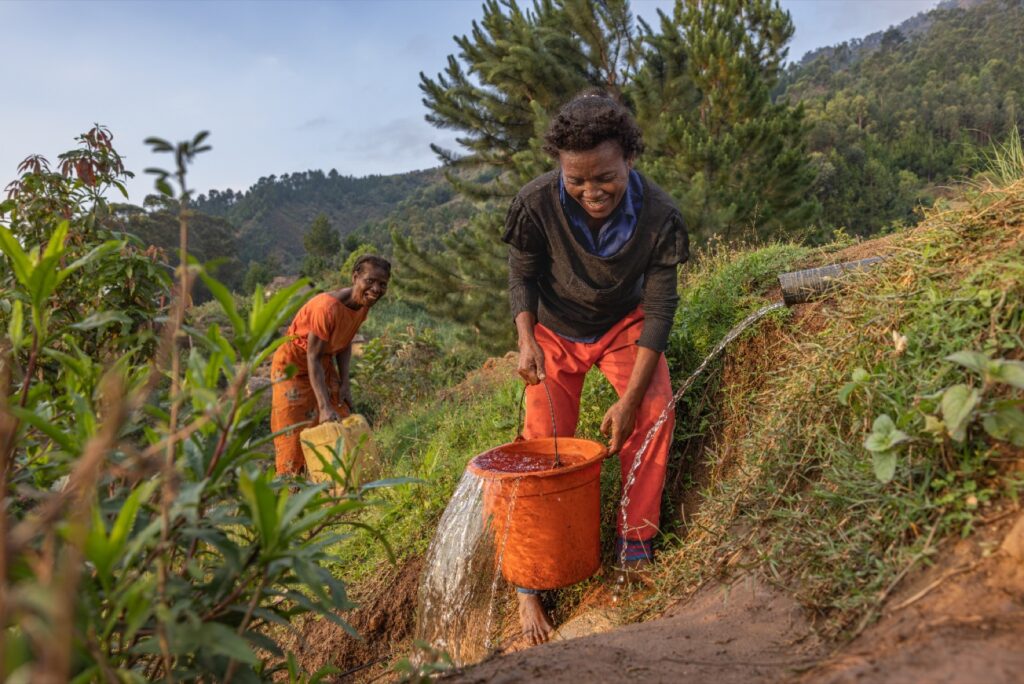
For far too long, economic development and the preservation of nature have been presented as competing objectives. Yet in the Malagasy context, this opposition is a genuine strategic error. Without secure water supplies, functioning soils and forests regulating watersheds, there can be no competitive agriculture, no reliable hydropower and no lasting appeal for investment.
The real trade-off, then, may not be between ‘protecting’ and ‘developing’, but between different models of development: some consume natural capital until it is exhausted; others seek to maintain the very resources on which their own value creation depends. This distinction becomes particularly important in a context where needs for infrastructure, energy, agricultural production and jobs remain considerable.
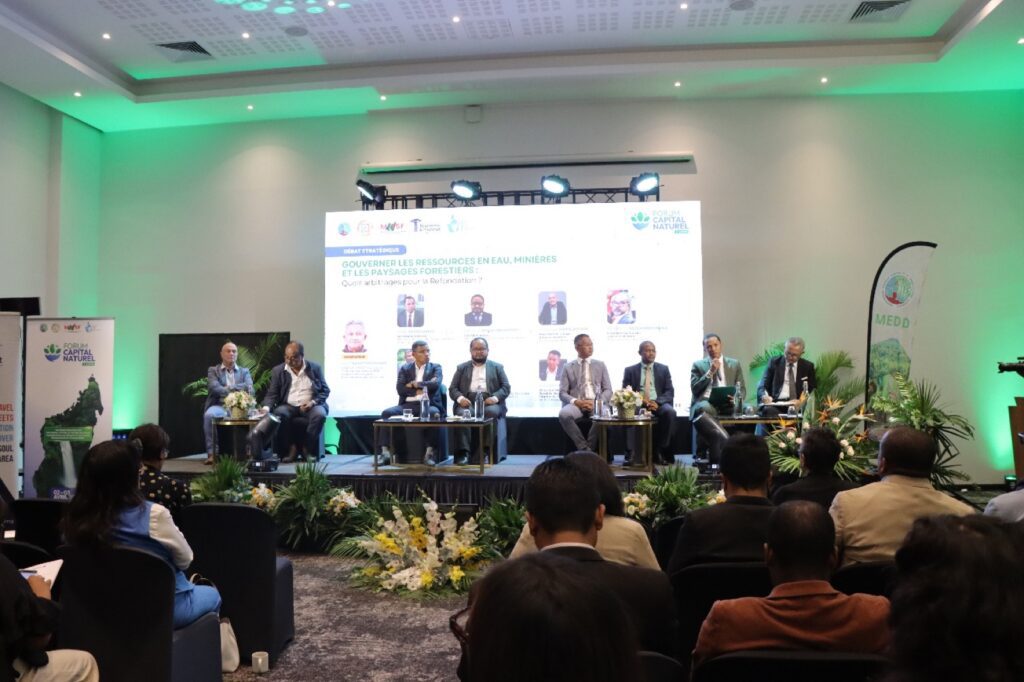
This conviction is now being championed at the highest level. At the Natural Capital Forum (Forum Capital Naturel) 2026, the Executive Director of FAPBM, Dr Rija Ranaivoarison, summed up the shared responsibility of stakeholders as follows:
‘I believe that each of us has a different but complementary responsibility. The State must set the rules of the game, arbitrate over the long term and ensure coherence between water, mining, forests and land-use planning. The private sector must move towards value-creation models that factor in the real cost of ecological degradation. Financial institutions must redirect flows towards investments that protect water, restore landscapes and reduce risks. And conservation actors must provide the data, the economic evidence, the mechanisms and the long-term vision.’
This shared responsibility outlines a four-dimensional roadmap: a State that arbitrates and secures the regulatory framework; a private sector that internalises the real cost of degradation in its business models; financial institutions that redirect their flows towards assets that protect water and reduce risks; and conservation actors that provide data and economic evidence. The issue thus becomes a collective one: how can we ensure that the value created today does not translate into a heavier ecological and economic bill tomorrow? The real challenge, therefore, is not to choose between the economy and nature, but to turn water security and ecosystem services into assets for growth and resilience.
When degrading costs less than preserving: correcting economic incentives
If ecosystem degradation continues, it is not because of economic irrationality, but because market signals remain distorted. Today, practices such as charcoal production, agricultural deforestation and the overexploitation of water remain economically attractive in the short term, while preservation is perceived as a cost.
This is where a crucial part of the paradigm shift is played out: as long as the benefits of conservation remain diffuse, deferred or invisible in economic accounts, while the gains from exploitation are immediate, short-term decisions will inevitably tend to favour the latter.
Reversing this logic requires realigning economic incentives around three levers: gradually removing the mechanisms that indirectly finance degradation; introducing positive incentives for agroecology, reforestation and water efficiency; and building in a form of ‘true pricing’ for natural capital. As long as degrading remains cheaper than preserving, poor trade-offs will continue. Making natural capital an economic driver means, first and foremost, correcting these signals so that rational choices also become sustainable ones.
It also means better measuring what is currently barely visible in economic decision-making: the value of a forest that secures water supplies, of a mangrove that protects a coastline, or of an ecosystem that supports tourism or fisheries. What is not measured is, after all, likely to be undervalued when trade-offs are made.
FAPBM: a long-term financing model for natural capital
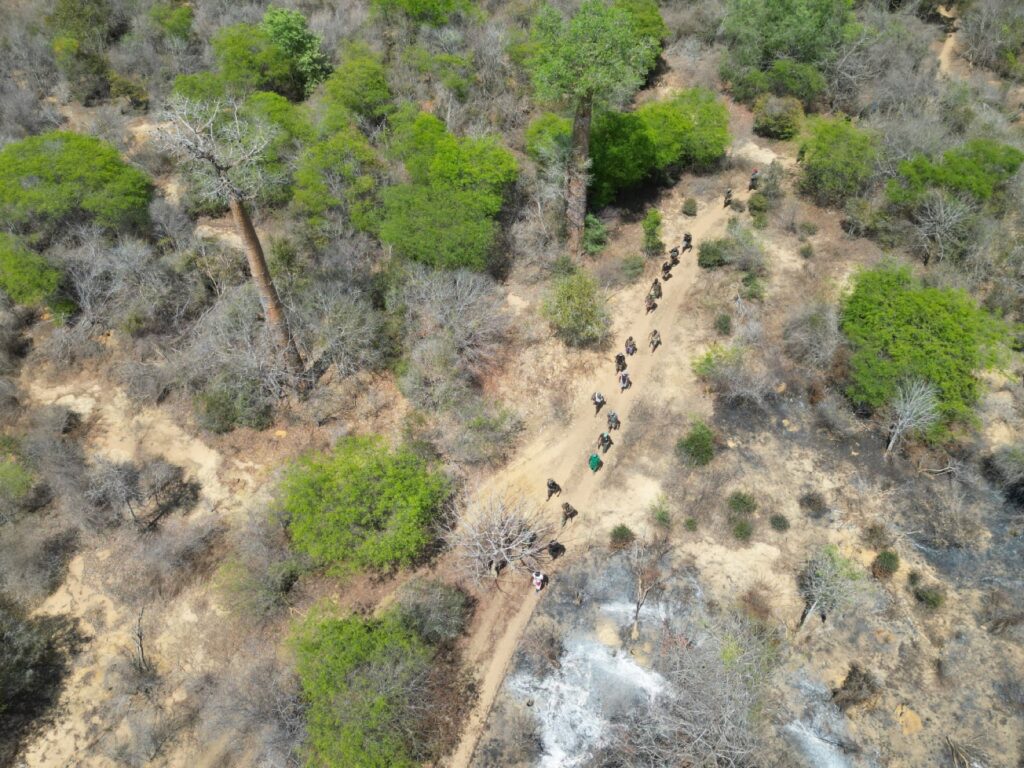
Recognising the value of natural capital is not enough: mechanisms are also needed to finance its protection over the long term. This is precisely FAPBM’s purpose. Established in 2005, the Foundation brings twenty years of experience as an environmental trust fund. Thanks to an endowment of approximately US$157 million, it generates stable annual income — in the order of US$7 million, of which nearly US$6 million is channelled directly to the field — to provide lasting support to 75 of the country’s 146 protected areas.
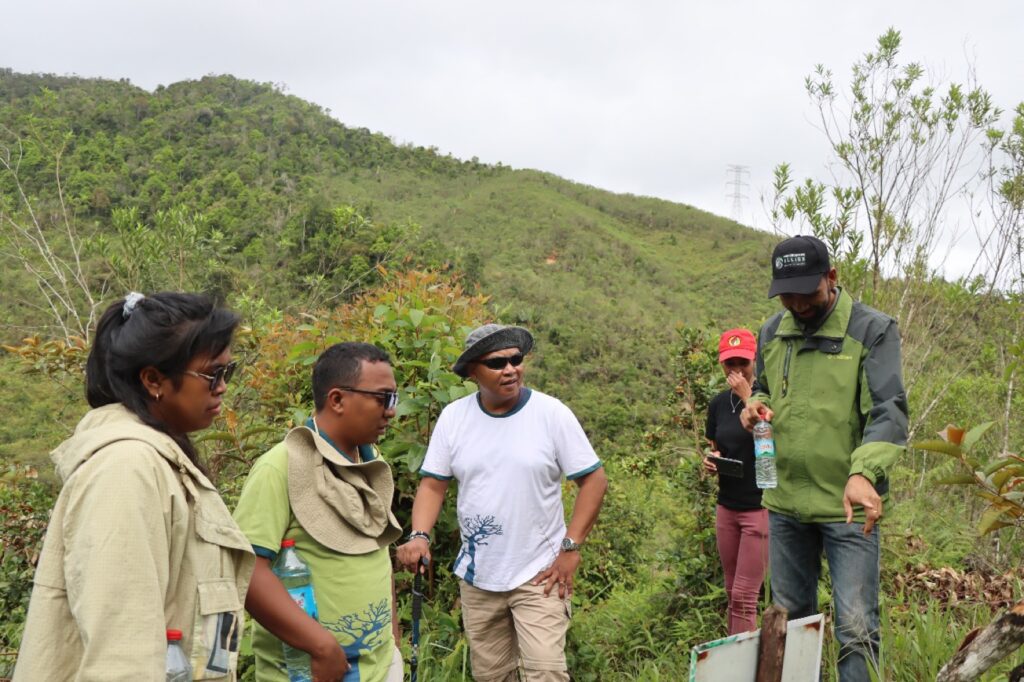
This model offers a concrete illustration of what it means to ‘invest’ in natural capital rather than treat it as a burden. Unlike project funding, whose horizon is often limited to a few years, an environmental trust fund such as FAPBM provides long-term financial predictability for the protected areas it supports — a practical response to the call for financial institutions to redirect their flows towards long-term investments. The projects and programmes supported by the Foundation show that landscape restoration is not an expense but a productive investment: it secures water supplies, strengthens the rural economy and generates value for local communities. By providing data, economic evidence and a long-term vision, FAPBM is helping to put nature back at the heart of development trade-offs.
This logic invites us to take a fresh look at conservation spending. When a protected area helps to preserve a water resource, support local economic activities or reduce certain environmental risks, its funding can be seen not merely as a protection expense, but as a contribution to preserving an asset on which several sectors of the economy depend.
Towards a model in which ecology becomes a driver of growth
The paradigm shift is under way, but it still needs to be embedded in concrete decisions: mapping the areas where trade-offs are most critical, adapting governance, and deploying a financial architecture equal to the challenges at stake. FAPBM’s mission and values, like its strategic plan, are fully aligned with this trajectory.
The challenge now will be to move from observation to integration: integrating the value of natural capital into public policies, corporate strategies, investment decisions and land-use planning choices. Only then can the paradigm shift move beyond rhetoric to become a genuine change in the way decisions are made.
A new path is emerging for Madagascar: one of development in which ecological wealth is no longer an obstacle to growth, but its foundation. Recognising natural capital as a sovereign strategic asset means offering future generations a more resilient, more stable and more prosperous country — and giving ourselves the financial means to achieve it. This is the goal FAPBM has set itself, alongside the State, the private sector and financial institutions. The question, therefore, is no longer whether Madagascar can afford to invest in its natural capital, but how to make this investment an integral part of its development model. To follow the initiatives that are bringing this vision to life, explore the latest news from FAPBM.