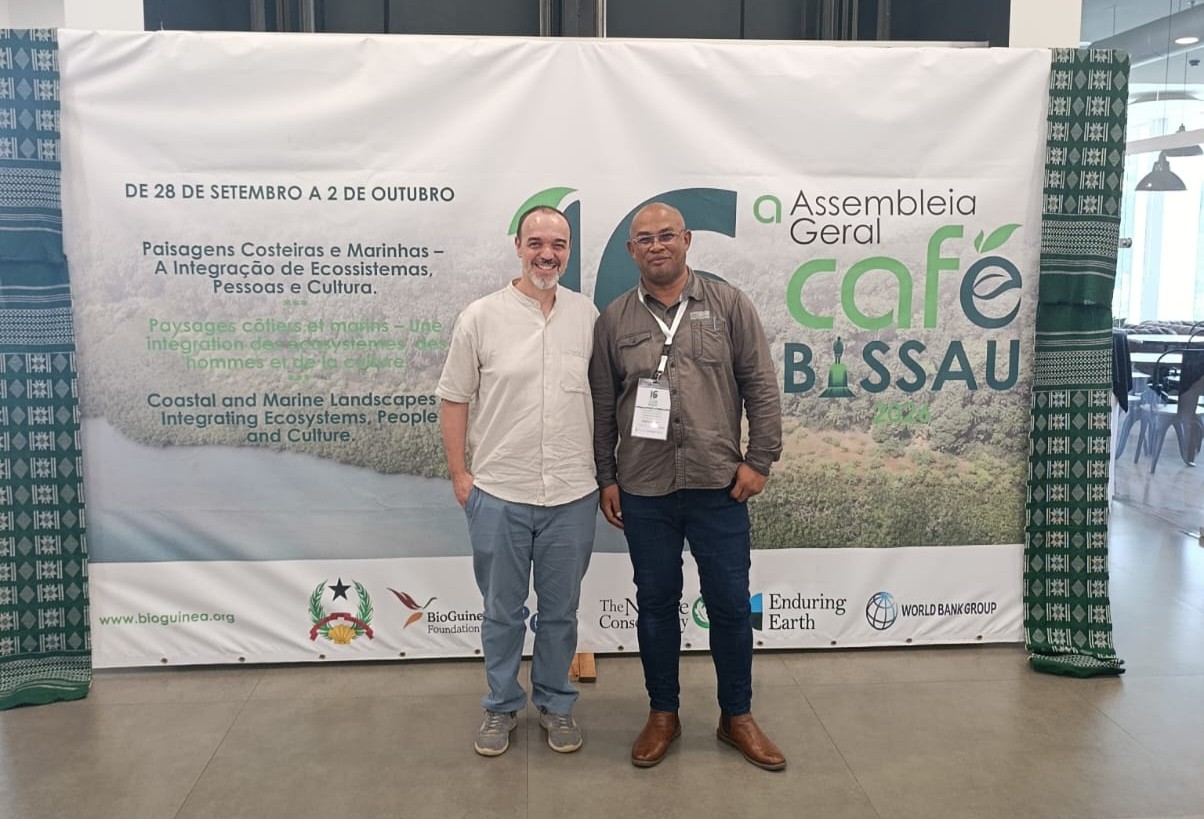
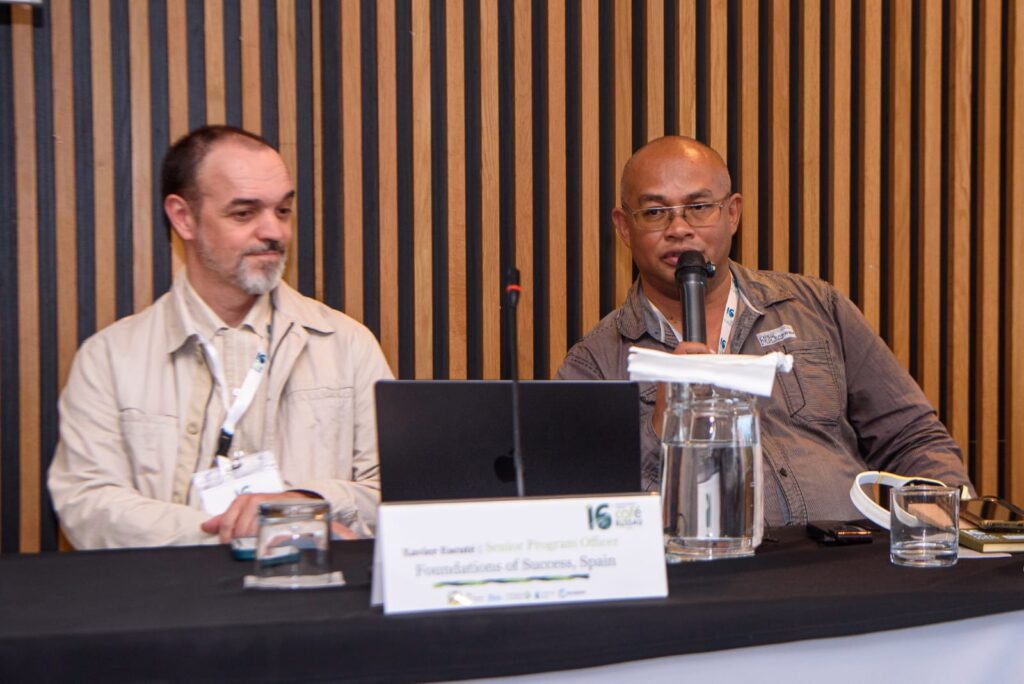
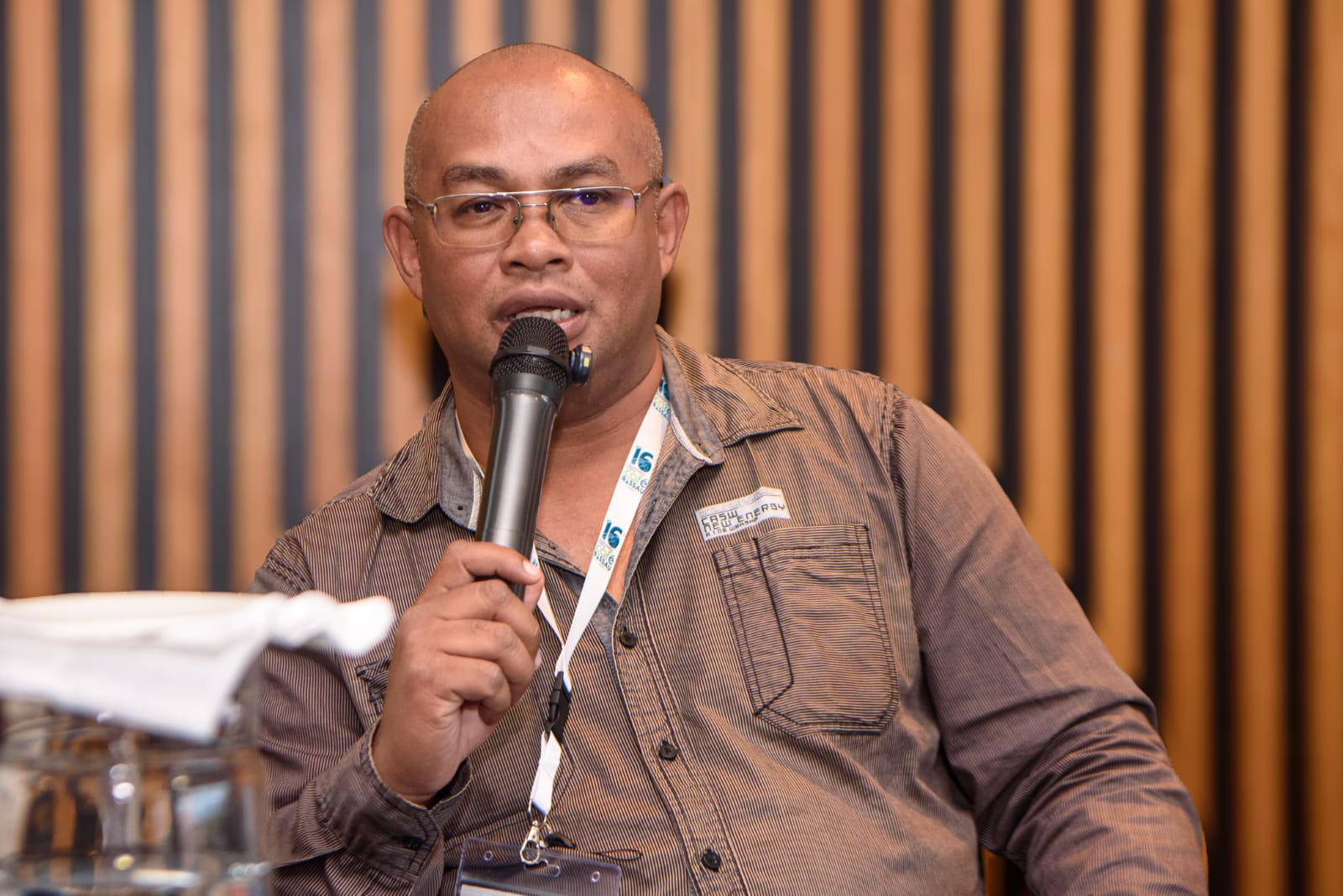
At the 16th General Assembly of the Consortium of African Funds for the Environment (CAFÉ) in Bissau, FAPBM, as a member of the consortium, shared its experience of monitoring and decision support for conservation. Ranto Randriantsoa, FAPBM’s Programmes and Impacts Director, presented at the assembly the approach the Foundation has undertaken to better track its funding, understand its results and guide its strategic choices.
Growing conservation challenges, more demanding choices
With capital of USD 157 million in 2026, FAPBM is the largest conservation trust fund in Africa. It supports 75 of Madagascar’s 146 protected areas, which are home to species and habitats found nowhere else on Earth and sustain the communities living alongside them.
As its activities develop, FAPBM needs an increasingly clear view of the results associated with its funding and of how they contribute to conservation objectives. The evolution of its portfolio, the diversity of protected area contexts and the emergence of new funding opportunities make this steering capacity all the more important.
The challenge is to use the available data more systematically in order to understand the results achieved, identify significant changes and inform future decisions.
Three questions have become central:
- Are we funding the right protected areas?
- Are we funding them appropriately?
- What results and impacts are our funds helping to deliver?
These questions invite us to look beyond simply tracking funding: the aim is to better understand what the resources make it possible to achieve, under what conditions and with what results for protected areas, biodiversity and communities.
To answer these questions, FAPBM needed to be able to bring together more easily the various pieces of information it holds, analyse them over time and use them collectively to guide its choices.
Two years of work with Foundations of Success (FOS)
For two years, with Foundations of Success (FOS) and the support of the Hempel Foundation, FAPBM has been strengthening its strategic framework, its management information system (MIS) and its dashboard.
This work has made it possible to:
- carry out a mid-term evaluation of the current strategic plan;
- map and rethink internal processes and team structure in light of the new challenges;
- co-develop a strategic framework, an MIS and an interactive dashboard that bring the essential strategic information together in one place.
The aim is above all practical: to make information more accessible and more useful for the teams who must track funding, understand results and make decisions. The strategic framework sets out the objectives and the results sought; the MIS organises the information needed to track them; and the dashboard makes it easier to read and use.
By bringing these elements together, FAPBM has a common basis for monitoring its portfolio, comparing relevant information across protected areas and better identifying trends or points requiring attention.
Ultimately, the value of the system lies less in the amount of data gathered than in its ability to make that data useful: to track results, feed discussions within the teams and contribute to better-informed decisions.
The MIS and dashboard were built in collaboration with Mike Honey and Annette Stewart, whose expertise was central to the work alongside the FAPBM teams.
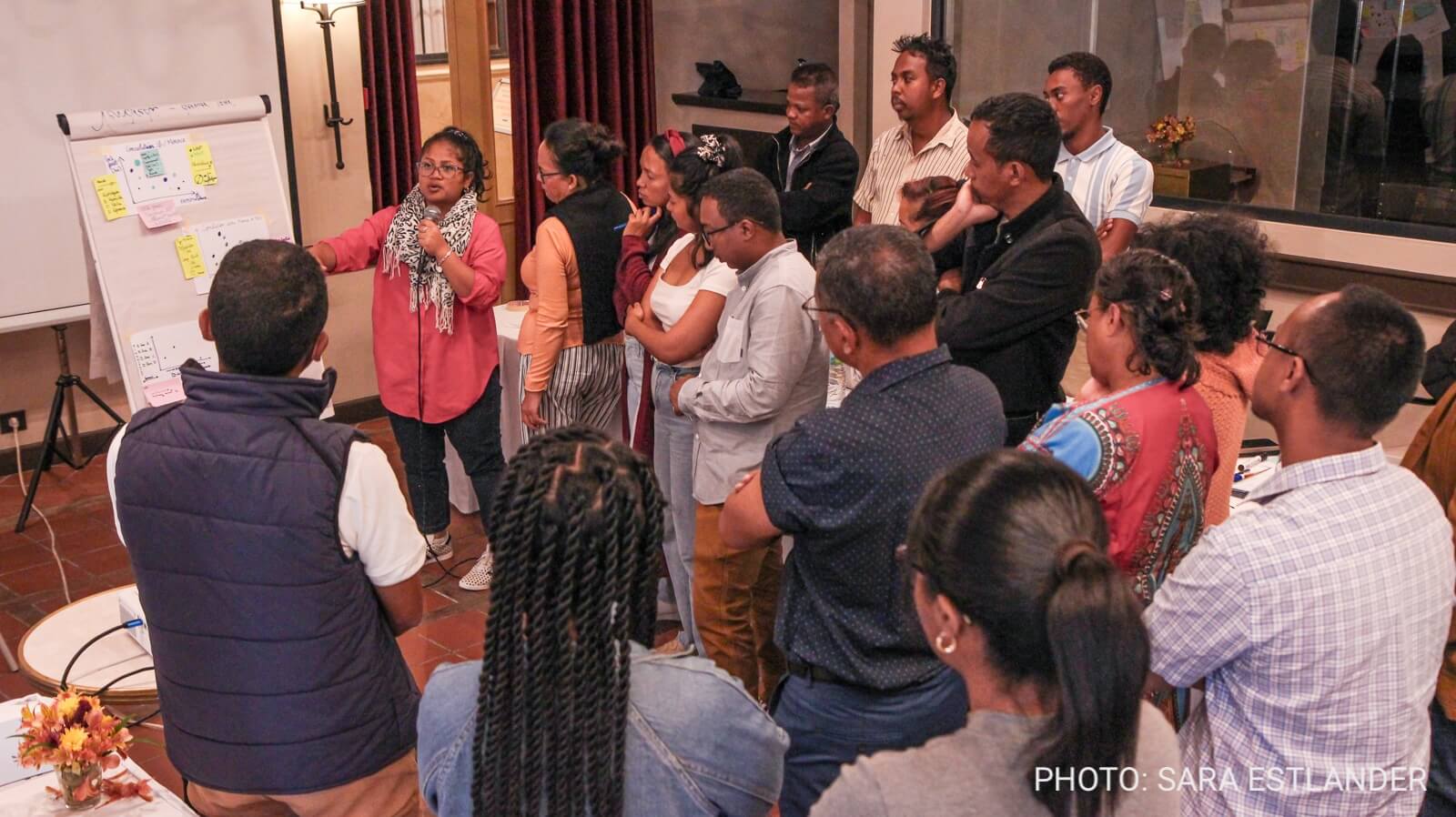
From the outset, the aim was ownership: the Monitoring, Evaluation, Accountability and Learning (MEAL) technical team manages and develops the system itself. This ownership is essential if the tool is to remain useful over time and evolve with FAPBM’s needs.
Measure, learn, adapt
“This is a major first for FAPBM. After nearly 20 years of existence, marked by significant achievements but also by recurring questions about the actual impact of our interventions, this system represents an important milestone in our ability to better document, measure and demonstrate the changes we contribute to. Our expectation is that it will provide us with reliable and up-to-date information to guide our decisions, improve our interventions and ultimately strengthen our long-term impact on protected areas, biodiversity and local communities. The challenge now is to make the system fully operational, to ensure it is owned by the teams and partners, and to secure regular, high-quality data reporting, so that it becomes a genuine steering and decision-support tool.” – Ranto Randriantsoa, Programmes and Impacts Director, FAPBM.
This approach reflects an important shift: monitoring is no longer seen solely as an exercise in accountability or reporting, but as a lever for learning and steering. The data should help to understand what is changing across the portfolio, to identify questions requiring deeper analysis and, where relevant, to adapt choices and interventions.
Better decisions begin with a solid strategic framework and actionable information in the right hands. The value of these tools therefore lies not in the dashboard itself. It lies in the cycle they help to establish: defining a clear ambition, collecting the relevant information, analysing it, drawing lessons from it and using those lessons to adjust decisions.
For FAPBM, this capacity is particularly important in a context where conservation needs are many and resources necessarily limited. A better reading of the portfolio can help to inform choices about which protected areas to support, which funding modalities to favour, and the areas where results or difficulties call for particular attention.
And because this capacity is built within FAPBM itself, its benefits are lasting.
Knowledge sharing between trust funds
Other trust funds, in Africa, Latin America and elsewhere, are taking on an increasingly strategic role. Despite very different ecological and institutional contexts, they face similar challenges: managing ever larger portfolios, accounting for the use of funds, demonstrating their contribution to conservation results and having information robust enough to guide their choices.
FAPBM’s experience shows that a monitoring system can go beyond producing reports: when it is linked to strategy and owned by the teams, it can become a genuine management and learning tool.
This experience underlines the importance of knowledge sharing between trust funds and conservation partners. As a CAFÉ member, FAPBM intends to continue these exchanges within the consortium and with the wider community, in order to strengthen its funding of Madagascar’s protected areas.
In Bissau, the message FAPBM brought was thus as much a presentation of a tool as a reflection on a broader transformation: how to move from more data to better decisions, and from better decisions to continuous learning in the service of conservation.
See also: Strengthening the trust funds that sustain protected areas