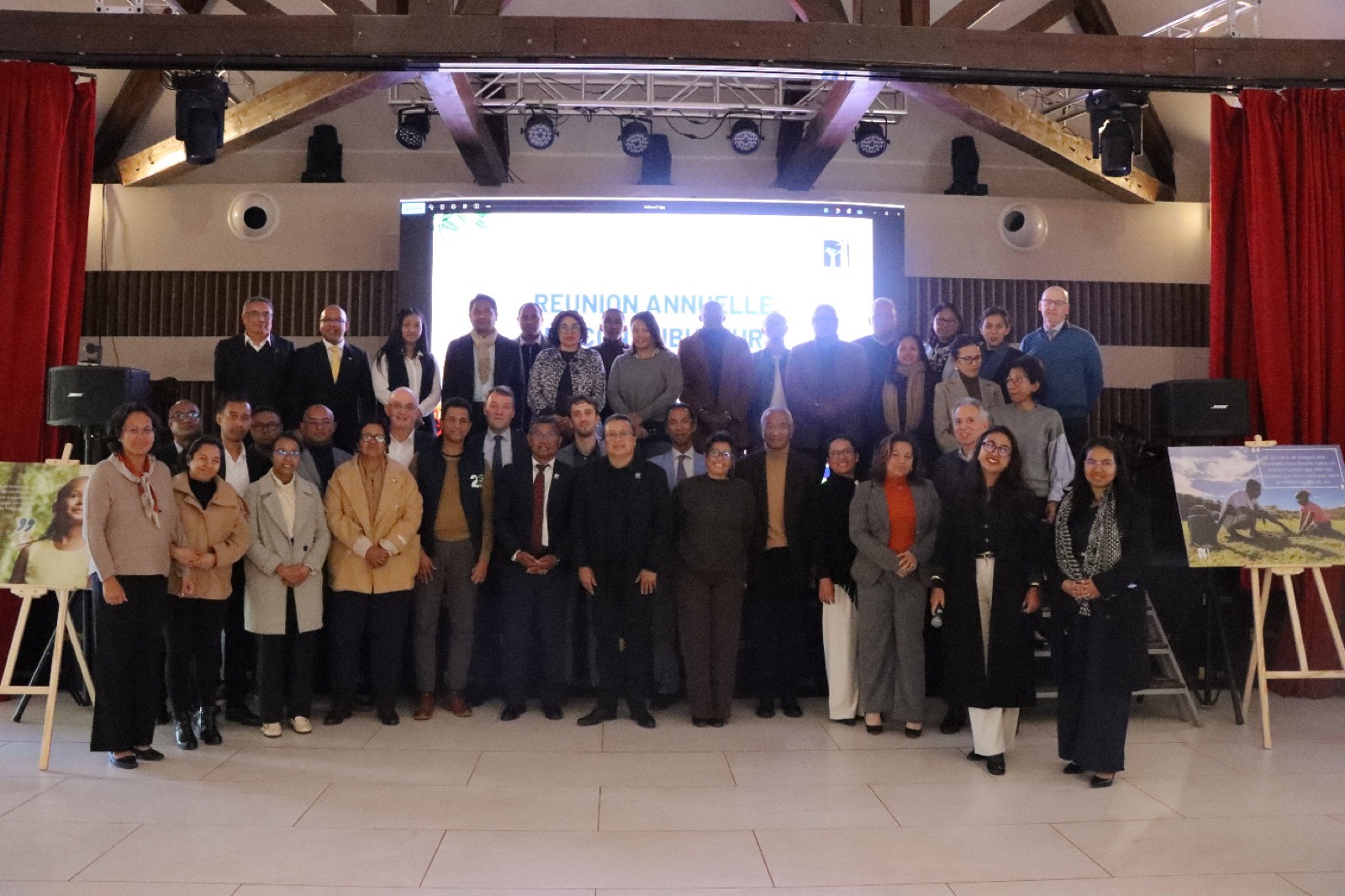
On 23 June 2026, the Foundation for Protected Areas and Biodiversity of Madagascar (FAPBM) held its 24th annual contributors’ meeting at the Golf du Rova in Antananarivo. The event brought together its technical and financial partners, the members of its Board of Directors and the Executive Management team.
A key moment for dialogue and accountability, the meeting reviewed the results for the 2025 financial year, presented the Foundation’s main monitoring and management tools, and provided a forum to discuss the challenges and prospects for the sustainable financing of Madagascar’s Protected Areas.
A meeting built around results and outlook
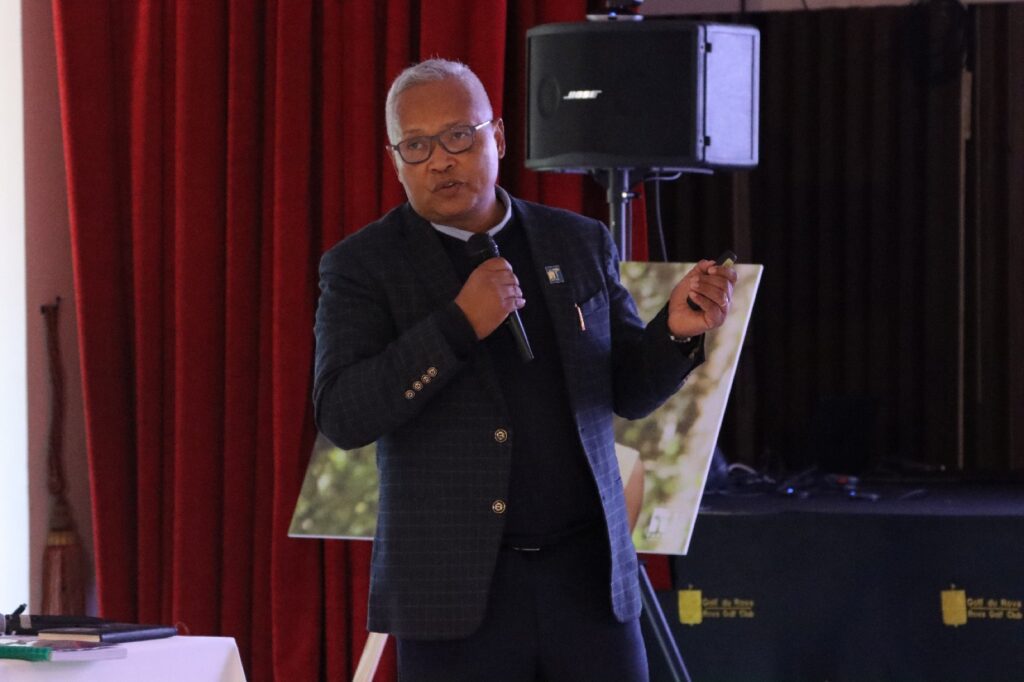
Following the opening of the meeting by Bruno Rajaspera, Chairman of the Board of Directors, and the presentation of the agenda by Dr Rija Ranaivoarison, Executive Director, discussions began with a review of 2025.
The morning was devoted to the presentation of the Foundation’s results, a demonstration of the Management Information System (MIS), the External Auditor’s report, and the main challenges and risks facing the protected area system in Madagascar.
Participants also saw a visual review of the actions supported during the year, before turning to investment performance and options for diversifying financing mechanisms.
The afternoon continued with a session dedicated to the “Contributors’ Voice”, allowing partners to share their perspectives and expectations of the Foundation.
2025: a year of consolidation and growth
The results presented at the meeting reflect both financial and operational progress at FAPBM.
In 2025, the Foundation had:
- USD 157.2 million in cumulative capital and a consolidated portfolio of USD 165.2 million
- 8.92% portfolio performance, against an annual target of 5% set by the investment policy
- USD 12.1 million mobilised during the year, of which around 85% of local uses went directly to financing protected areas
- USD 10 million allocated to financing Protected Areas, compared with almost USD 7.5 million in 2024, an increase of 32%
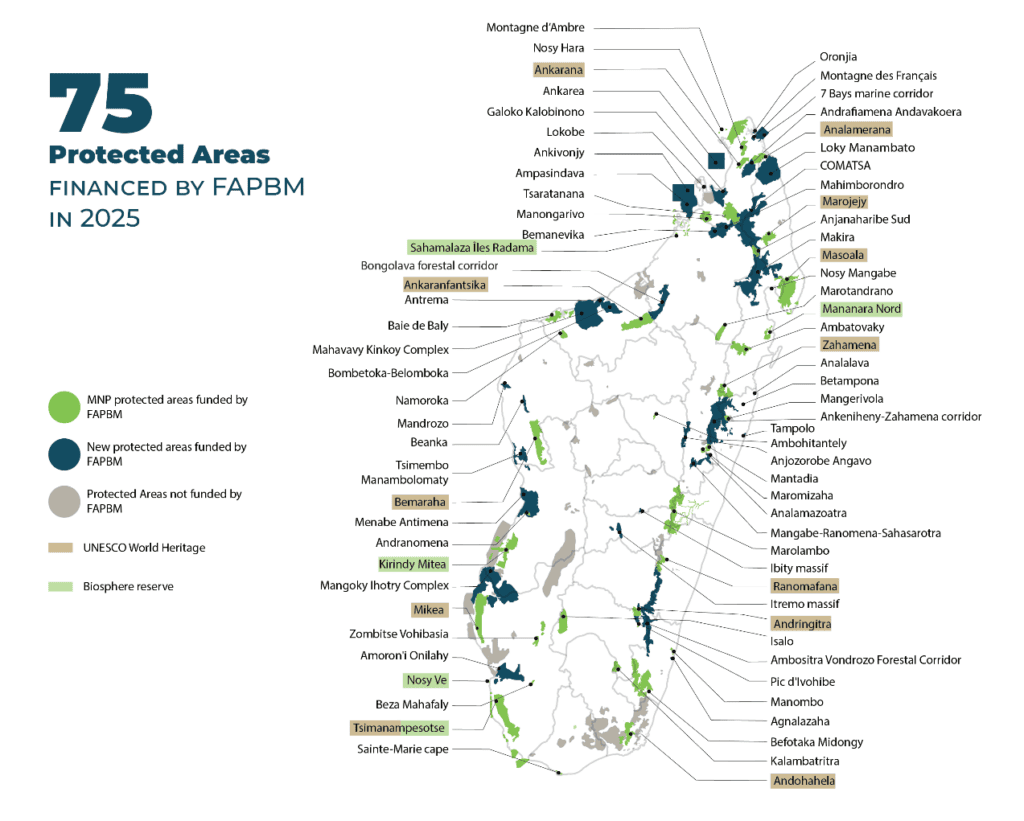
On the ground, the impact can be seen in concrete figures: FAPBM now supports 75 Protected Areas, covering more than 6.2 million hectares. The funded interventions have benefited more than 54,800 people and created more than 3,300 direct jobs, while also strengthening the capacities of site managers and the livelihoods of neighbouring communities.
FAPBM is thus continuing the trajectory set since its creation in 2005. Over twenty years, it has steadily consolidated its role as a sustainable financing mechanism for conservation, and today supports 75 Protected Areas across the country.
Conservation results that are also measured on the ground
Beyond the funding mobilised, FAPBM also tracks the results associated with the interventions it supports.
In 2025, the deforestation rate recorded in the Protected Areas funded by FAPBM stood at 0.91%, compared with 1.14% nationally. This corresponds to 99.09% of forest cover retained within the monitored network.
The fight against fires was also a major focus of the year. Through the Fire Fund, more than USD 200,000 was mobilised in 2025 to strengthen prevention and response capacities among Protected Area managers facing wildfires. This mechanism is one of the tools developed by FAPBM to enable a faster mobilisation of resources in the face of crises affecting the sites it supports.
Better-structured data to strengthen steering
Among the highlights of the meeting was the demonstration of the Management Information System (MIS), developed with FOS and with the support of the Hempel Foundation.
This platform aims to centralise and make better use of data on FAPBM’s interventions in the Protected Areas it supports. In particular, it makes it possible to track information on conservation status, deforestation, site management effectiveness and the socio-economic results of funding.
The MIS is thus a new tool for improving results monitoring, facilitating data analysis and strengthening the quality of reporting to partners.
Governance that supports growth
The growth of FAPBM’s activities has also been accompanied by a strengthening of its internal organisation.
In 2025, the Foundation continued the reorganisation of its teams and functions, notably with the establishment of the Operations and Support and Programmes and Impact directorates, and the strengthening of Audit and Internal Control.
This evolution aims to adapt the Foundation’s capacities to the growth of its portfolio, the diversity of its financing mechanisms and the requirements of its partners.
The External Auditor’s report presented at the meeting also confirmed an unqualified opinion on the 2025 financial statements. Of the recommendations arising from previous financial years, 48 out of 59 have been implemented, an implementation rate of 87.3%.
A 2026 action plan was also presented around five priorities: documentation quality, procurement, partner monitoring, risk management and data governance.
New mechanisms to meet growing needs
The meeting also addressed one of the main challenges of the coming years: diversifying the resources devoted to conservation.
Given that the financing needs of protected areas remain far greater than current capacities, several avenues are being explored: new partnerships with donors, innovative financing mechanisms, increased mobilisation of the private sector, and stronger financing linked to climate, biodiversity and ecosystem services.
This momentum builds on the efforts undertaken in 2025, notably the international roundtable held in Frankfurt with KfW on the sustainable financing of biodiversity in Madagascar.
At the same time, partnerships with philanthropic foundations are growing, as illustrated by the one established with the Hempel Foundation, which notably finances conservation initiatives in the western baobab forest landscapes and in Ala Hiriky-Mandrare, with FAPBM as the financial mechanism.
2025, a year of outreach and mobilisation
2025 was also marked by the celebration of FAPBM’s 20th anniversary, a highlight of institutional communication that strengthened its role as a sovereign and lasting funder of Madagascar’s protected areas, notably through its accreditation to the Green Climate Fund. On the international stage, the Foundation carried Madagascar’s voice at the IUCN World Conservation Congress, organised the Frankfurt International Roundtable in collaboration with the German development bank KfW, and contributed to the official establishment of the IUCN National Committee of Madagascar – initiatives that helped generate new commitments to the sustainable financing of biodiversity.
These milestones also helped strengthen exchanges with partners and open up new prospects for mobilising resources for Protected Areas.
Preparing the coming years with contributors
Towards 2030: consolidating and diversifying
The annual meeting was not limited to a review of the past year. It also opened discussions on future directions: strengthening institutional governance, continuing the digitalisation of processes, developing team skills and, above all, the sustainable diversification of financial resources.
Given that the financing needs of protected areas remain far greater than current capacities, several avenues are being explored: new partnerships with donors, innovative financing mechanisms, increased mobilisation of the private sector, and stronger financing linked to climate, biodiversity and ecosystem services. The progressive capitalisation mechanism for European Union funding under the FAMINDRA project illustrates this momentum: it provides for the gradual addition of resources to the Foundation’s capital over several years, thereby durably strengthening its financing capacity.
The “Contributors’ Voice” session extended these reflections through a direct exchange with the Foundation’s partners.
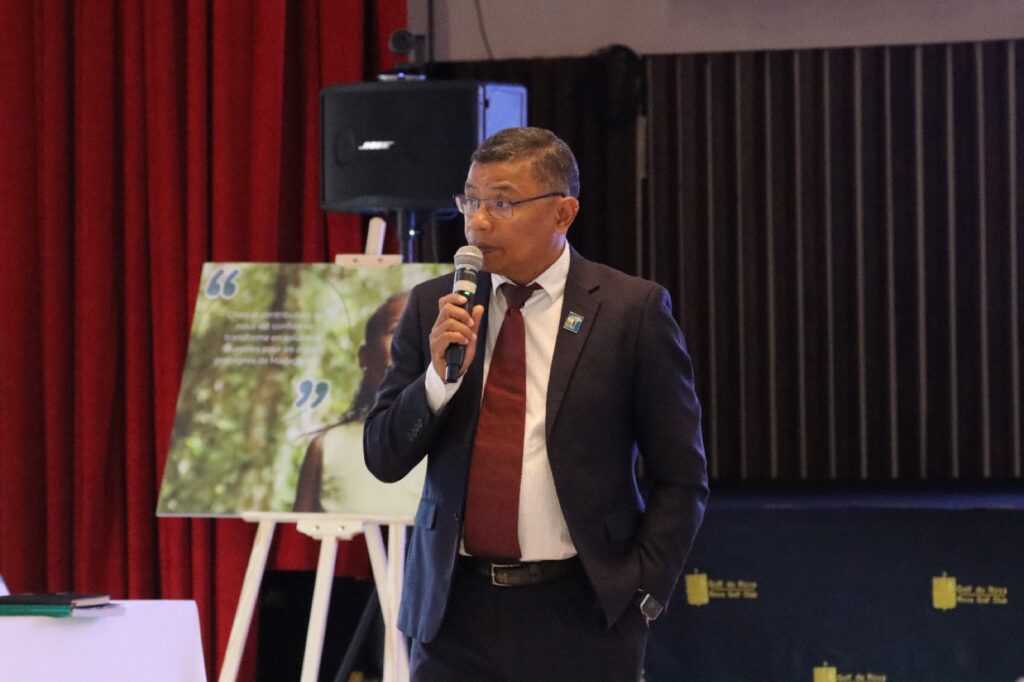
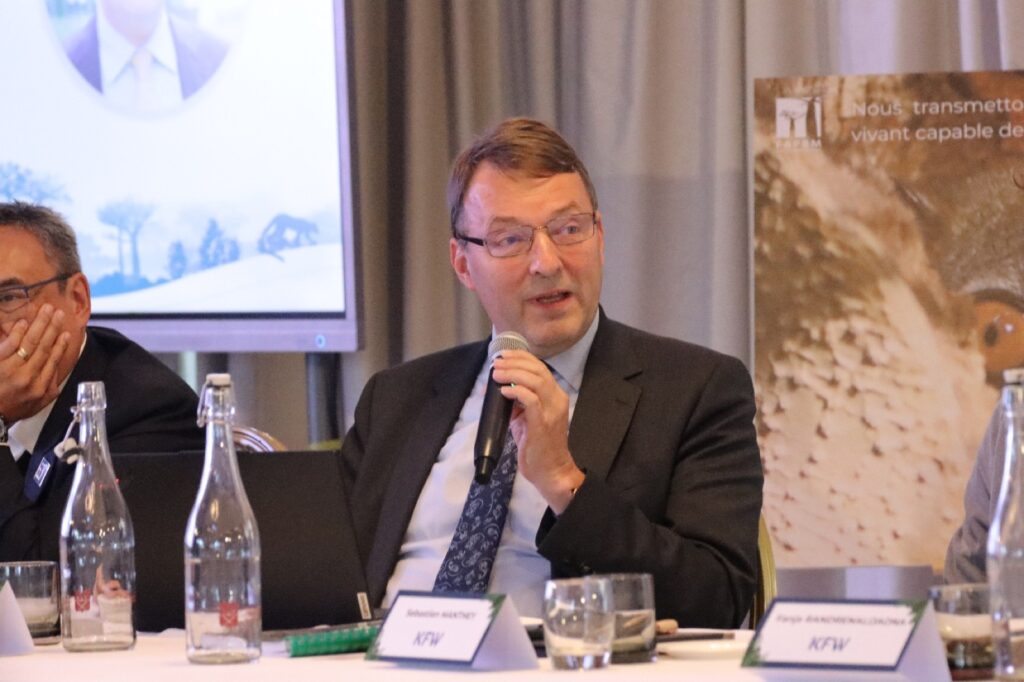
In closing, Mr Jochen Harnisch, Head of the Biodiversity and Agriculture Division for West Africa, East Africa and Madagascar at KfW, speaking on behalf of the donors, welcomed the results presented and reaffirmed the importance of working with FAPBM for the sustainable financing of conservation.
Trust to be sustained over time
Twenty years after its creation, FAPBM is continuing its development with one central objective: to secure over the long term the resources needed to finance Madagascar’s Protected Areas, while strengthening results monitoring and transparency towards its partners.
With 75 Protected Areas supported, more than 6.2 million hectares covered and a consolidated portfolio of USD 165.2 million, the 2025 results illustrate the distance travelled. They also underline the importance of continuing efforts to mobilise and diversify resources to meet future conservation needs.
This momentum rests, as it has for twenty years, on a single conviction: Protected Areas are sources of life, and their future depends on our collective ability to finance them sustainably.
Recognising our partners
FAPBM extends its sincere thanks to the Malagasy State, through the Ministry of Environment and Sustainable Development and the Ministry of Economy and Finance, for their commitment alongside the Foundation.
It also thanks each of its financial partners and contributors for their trust and commitment to the sustainable financing of Madagascar’s Protected Areas: KfW, the French Development Agency (AFD), the European Union, the Global Environment Facility (GEF), the World Bank, the French Global Environment Facility (FFEM), Conservation International, WWF, the Hempel Foundation and Conservation Allies.
To each of you, thank you for this trust and for your contribution to preserving Madagascar’s biodiversity and sources of life.