Investing in local expertise for the sustainability of protected areas
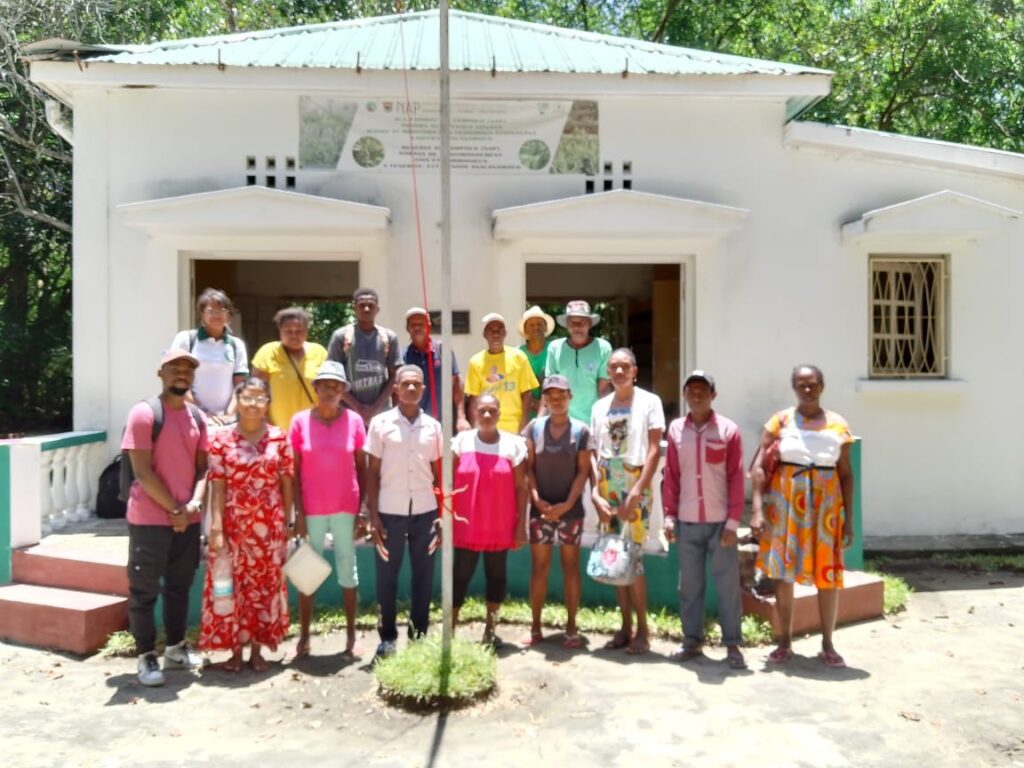
The sustainable management of protected areas relies on solid skills, effective coordination, and a good understanding of local realities. In Madagascar, managers and communities on the front lines of biodiversity conservation face multiple challenges: lack of resources, human pressures, climate change, and limited technical and managerial capacities.
To address these challenges, Madagascar Protected Areas and Biodiversity Fund (FAPBM), in partnership with the Danish Hempel Foundation, has launched a skills development program aimed at professionalizing biodiversity management in Madagascar by providing managers and community leaders with certified skills.
The program fills an essential need in the sector by offering continuing education in the areas of conservation, development, governance, community mobilization, and environmental education. It promotes a common dynamic among actors in the field: trainers, coaches, managers, and community leaders, strengthening local governance and sustainable ownership of conservation actions by communities and students.
An ambitious vision for skills development
Through the Capacity Building Project, FAPBM promotes the vision of an integrated national programme for skills development and the promotion of environmental education.
The National Skills Development Programme, designed in collaboration with local stakeholders, aims to professionalise conservation professions in Madagascar. It aims to establish a coherent national training and certification framework, centred on a practical, participatory and contextualised approach, designed to strengthen the capacities of managers, technicians, field workers, community leaders, young professionals and decision-makers involved in conservation.
At the same time, the National Programme for Education on the Environment and Sustainable Development, also currently being designed, seeks to promote applied research, education and behavioural change by involving students, communities and local actors in order to raise awareness and ownership of environmental issues.

First steps taken in developing the programme
Under the leadership of FAPBM, a stakeholder committee has been set up, bringing together representatives from ministries, institutions and key conservation stakeholders. This committee acts as a strategic driver and expert body, responsible for guiding and launching priority initiatives and ensuring their consistency with local and national needs.
An unprecedented inter-ministerial commitment, bringing together the Ministry of Environment and Sustainable Development (MEDD), the Ministry of Technical Education and Vocational Training (METFP), the Ministry of Higher Education and Scientific Research (MESUPRES), the Ministry of National Education (MEN) and the Ministry of Fisheries and the Blue Economy (MPEB) has been initiated to develop a common and sustainable vision for skills development. This strategic collaboration illustrates the willingness of institutions to move beyond administrative silos and work in a coordinated manner to professionalise conservation professions in Madagascar.
Within this framework, the project has carried out assessments of existing programmes and launched co-creation workshops to better understand the needs and expectations of stakeholders, as well as current skill levels. These participatory approaches lay the foundations for a future skills framework and national certification framework, ensuring that future training courses are structured, recognised and adapted to local realities and aligned with institutional priorities.
These advances confirm the central role of FAPBM as a neutral and trusted facilitator, capable of bringing together institutional stakeholders, training centres and communities around a shared goal: to build a sustainable and operational national skills system for the preservation of Madagascar’s biodiversity.
Supported by Hempel Foundation, this programme benefits from strategic and financial support that enables it to consolidate achievements, strengthen pilot initiatives and ensure the sustainability and national scale of its actions. Thanks to this collaboration, FAPBM can combine technical expertise, institutional coordination and structural funding to ensure that skills development becomes a sustainable lever for conservation in Madagascar.
Amount managed: DKK 3,050,000 (USD 442,000)
Period: 2023–2025 (preparatory phase)